Government Cracks Down on Traffic Police High-Handedness Over Pending E-Challans
 frame and share


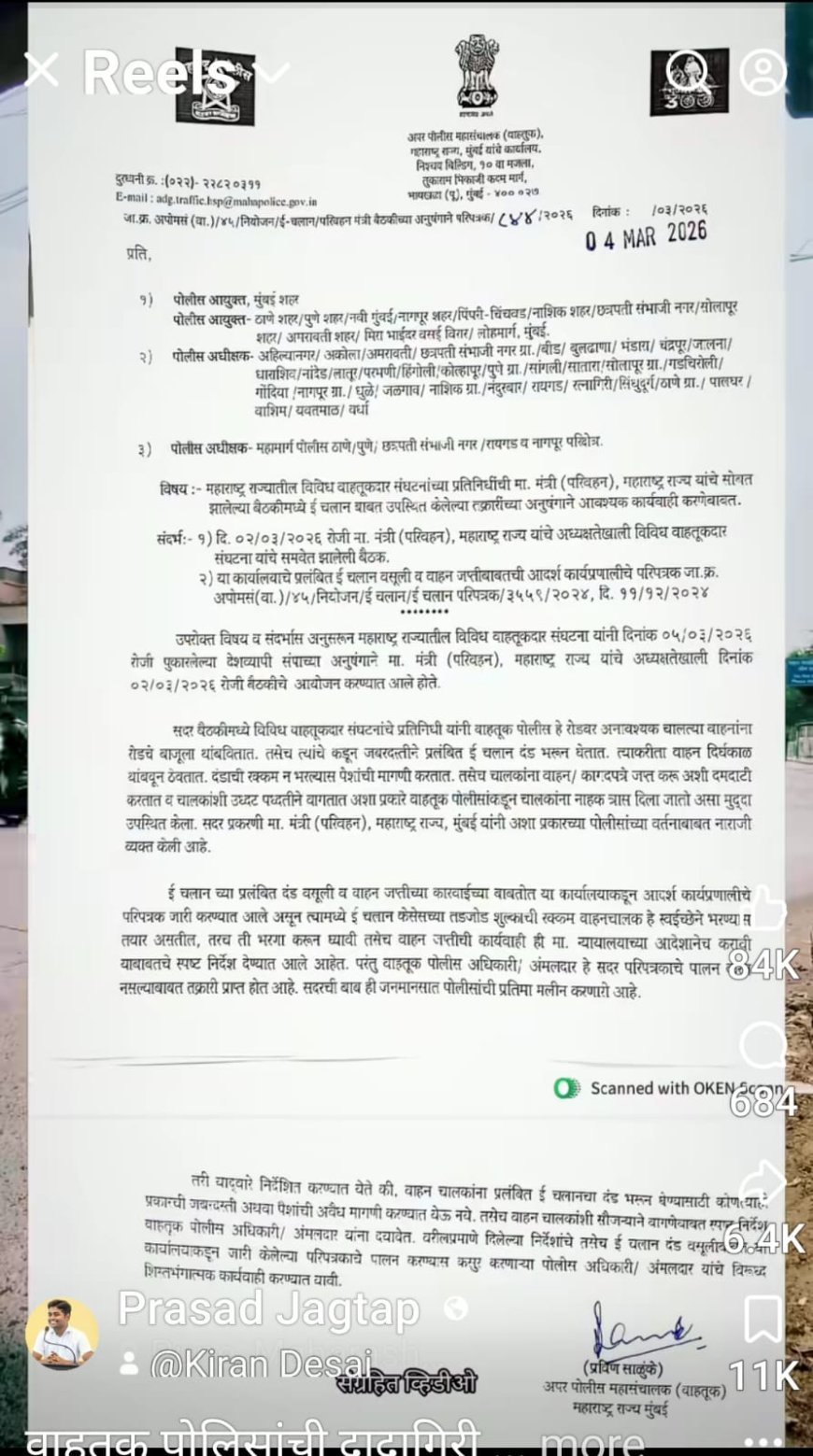
Mumbai: The state government has finally stepped in to curb the arbitrary actions of traffic police in some areas who were allegedly harassing motorists in the name of recovering pending e-challans. After a meeting chaired by the state Transport Minister, the Maharashtra Traffic Police Department issued a strict circular directing officers not to cause unnecessary inconvenience to motorists.
Various transporters’ associations across the state had raised serious complaints regarding the method of e-challan recovery. It was alleged that vehicles moving on the road were being stopped and drivers were forced to pay pending e-challans on the spot. In many cases, vehicles were detained for long periods and drivers were threatened with seizure of their documents or vehicles if the fine was not paid. Complaints were also made about rude and disrespectful behavior by traffic personnel in certain places.


Taking note of these complaints, the Transport Minister expressed displeasure over such conduct by the traffic police. Subsequently, the Additional Director General of Police (Traffic) issued a circular with clear instructions to all Police Commissioners and Superintendents of Police across the state.


The circular states that pending e-challan fines should be accepted only if motorists voluntarily choose to pay them. Under no circumstances should drivers be forced to make payments. It also clearly mentions that vehicles should not be seized without a court order.
Traffic police have also been instructed to behave politely and courteously with motorists. The circular warns that disciplinary action will be taken against any officer or personnel found violating these instructions.
Meanwhile, the meeting was convened against the backdrop of a nationwide strike call given by transporters’ organizations. The government’s decision is expected to provide relief to motorists, although attention will now be on how effectively these instructions are implemented on the ground.