What Does Islam Say? In Which Situations Is Organ Transplant Not Permissible
In Islam, human life has extraordinary sanctity. The Holy Qur’an says that saving one life is like saving all of humanity. But along with this, the principle is also given that a person should not throw himself into destruction.
 Er. M.A Shakeel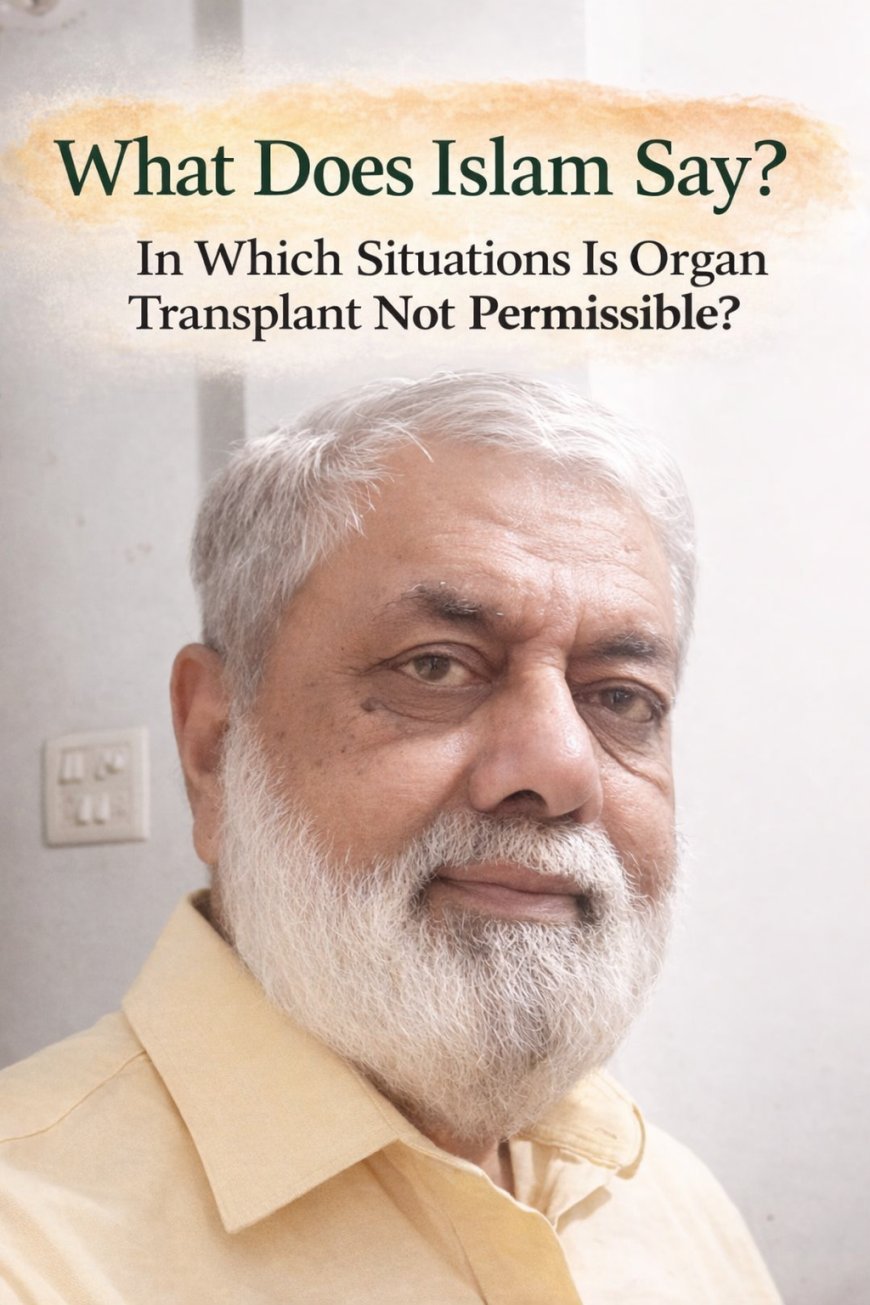


In Islam, human life has extraordinary sanctity. The Holy Qur’an says that saving one life is like saving all of humanity. But along with this, the principle is also given that a person should not throw himself into destruction. The Prophet Muhammad ﷺ also clearly said that neither should you harm yourself nor others. In the light of these principles, Islamic jurists have laid down guidelines regarding treatment, surgery, and organ transplantation.
The basic objective of Islamic law (Shariah) is the protection of life. However, this protection is not through blind risk, but based on wisdom and where the benefit is greater. A legal principle in Islamic jurisprudence states that certain or highly probable harm cannot be accepted for the sake of doubtful or weak benefit. Therefore, any treatment in which the risk of death or severe harm is greater may be questionable or even impermissible in Shariah.


Organ transplantation is, in principle, a form of treatment, but it is not like ordinary treatment. This is because it involves removing an organ from the body of a healthy person. Therefore, in this matter, two lives and two bodies are before Shariah: the donor (who gives the organ) and the recipient (who receives it). Shariah seeks to protect the rights of both; it is not the aim to sacrifice one to save the other.


One major situation in which organ transplantation is not considered permissible is when the donor’s life or basic health faces serious and permanent danger. If removing the organ is likely to severely affect the donor’s life, or he may suffer a illness in the future, then this goes against the principle of “do not harm yourself.” Putting the donor at risk merely because the other person might benefit is against the spirit of Shariah.
The second situation is when there is no reasonable hope that the recipient will survive. If a team of expert doctors concludes that the patient’s condition is such that the benefit of surgery is very small and the chances of death or severe complications are high, then such a surgery may not be considered “saving a life” but rather putting life into further danger. Jurists have written that treatment is only recommended when there is a strong likelihood of benefit; when harm is more likely, treatment may be avoided.
The third important situation involves financial dealings. Buying or selling organs for money is considered impermissible by most scholars, because turning human body parts into items of trade is against human dignity. If poverty or compulsion forces someone to sell or donate an organ, such consent is not regarded as valid consent in Shariah.
Now consider the example of a kidney transplant. It is often said that a person can live with one kidney. However, not every person’s physical condition is the same. If removing the donor’s kidney requires major surgery, cutting a rib, if there is a risk that the remaining kidney may not function properly, if the donor may later need dialysis, and must remain under lifelong medical monitoring, then this is not a minor harm but a permanent physical burden and risk. If, in the view of medical experts, these risks are significant, then putting such a donor through this process is not considered correct according to Shariah.
On the other hand, the condition of the recipient must also be considered. If the patient is extremely weak, the heart is working only twenty percent, the body is filled with fluid, there is a risk of multi-organ failure, a high chance of infection, and according to doctors the surgery is very high risk even with a strong possibility of death during or soon after the operation and furthermore the donor kidney is not a full match, then the hope of success becomes weak and the risk of death becomes dominant. In such a situation, this step may not be a strong effort to save a life, but rather like putting two lives in danger.
According to Islamic principles, saving one life by placing another life in serious danger is not permissible, especially when the chances of success are low. Therefore, when the donor faces certain or highly probable harm and the benefit to the patient is doubtful, organ transplantation is not considered permissible. “Let’s try and see” is not a Shariah argument; it becomes more like a gamble than treatment. It is necessary that reliable medical experts believe there is a strong likelihood that the patient will truly benefit.
Islam encourages treatment, but it does not allow blind risk. Organ transplantation can only be permissible when the donor’s risk is limited and bearable, there is a reasonable and strong hope that the recipient will survive, and the dignity of the human body and the limits of Shariah are respected. On the other hand, when harm is dominant and benefit is doubtful, such a transplant may be against the objectives of Shariah.
Dr. Riyazuddin Deshmukh
Retired Assistant Commissioner of Police, Aurangabad
8888836498