Leaked Intel Report: Iran's System Resists Trump's War Rhetoric
A leaked U.S. intelligence report challenges Trump's Iran narrative, revealing that military action is unlikely to collapse Tehran's resilient political system, raising 'day-after' concerns.
 frame and share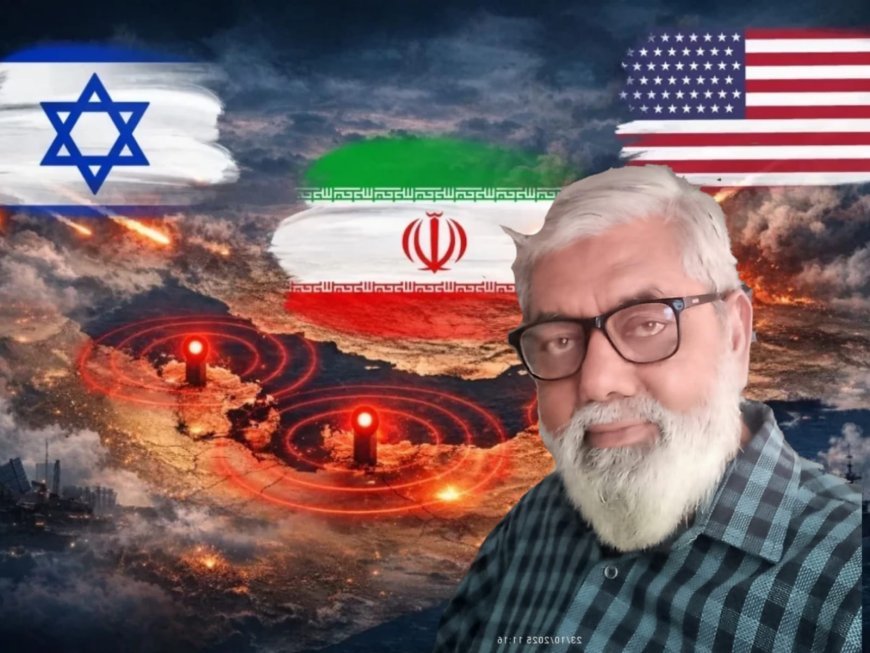


In the high-stakes arena of geopolitics, the thunder of war rhetoric often outpaces the measured steps of strategic reality. This crucial gap has become starkly visible in Washington’s stance toward Iran, following a significant intelligence leak reported by The Washington Post. The classified assessment has unveiled a profound divergence between President Donald Trump’s public pronouncements on Iran and the sober conclusions drawn by America’s own intelligence community.
The leaked report, prepared by the United States National Intelligence Council (NIC) a central body synthesizing analysis from all 18 U.S. intelligence agencies delivers a challenging verdict: even a large-scale military strike against Iran is highly unlikely to achieve a rapid collapse of the country’s political system. This finding echoes what seasoned analysts have long understood: Iran’s political order is deeply institutionalized, making it resilient to external force alone.


President Trump has consistently advocated for Iran’s “unconditional surrender,” hinting at Washington’s capacity to dictate a post-conflict leadership. This approach has been likened by some to the “Venezuela model,” where a top leadership removal aims to preserve the broader state structure for the installation of a U.S.-aligned government. However, the intelligence assessment appears to directly contradict the feasibility of such a strategy.


The NIC report concludes that Iran’s governance is not merely dependent on a single figure. Instead, it rests upon a complex, interconnected web of political, religious, and military institutions, all capable of maintaining continuity even amidst leadership crises. The assessment even suggests that in a hypothetical scenario involving the removal of Supreme Leader Ali Khamenei, the fundamental system would likely endure. Formally, the Assembly of Experts, an 88-member clerical body, is responsible for selecting a new Supreme Leader, with the powerful Islamic Revolutionary Guard Corps (IRGC) expected to exert substantial influence during any such transition.
This deep-seated institutional resilience significantly complicates any assumption that military pressure alone could fundamentally transform Iran’s political architecture.
Furthermore, the report highlights a critical strategic concern for policymakers: the “day-after problem.” Removing an existing leadership without a credible, unified alternative risks plunging the nation into a dangerous power vacuum. U.S. officials cited in the assessment reportedly found little evidence of an organized opposition capable of forming a stable government if the current system were to collapse. The weakening of central authority could also unleash unintended consequences, potentially empowering regional and ethnic militias. Analysts have already noted increased activity among Kurdish groups in western Iran and Baluch factions in the southeastern regions, underscoring the potential for internal fragmentation in the absence of a strong central government.
The extent to which these critical intelligence findings have influenced policy decisions in Washington remains unclear. Officials have declined public comment on the leaked assessment, and it is not known whether President Trump thoroughly reviewed the analysis before authorizing military actions related to the broader confrontation with Tehran.
Nevertheless, the intelligence report strongly suggests that Washington’s long-term objectives may ultimately shift away from outright regime change. Instead, the focus could narrow to limiting Iran’s strategic capabilities such as degrading its ballistic missile infrastructure, weakening its naval forces, and preventing advancements in its nuclear program or the supply of weapons to regional allies.
The strategic debate now unfolding in Washington reflects a recurring dilemma in modern foreign policy. Military power can undoubtedly alter the balance of force, but it rarely guarantees desired political outcomes, especially in nations where political legitimacy is deeply rooted in embedded institutions.
Should the confrontation with Iran intensify, policymakers in Washington will inevitably grapple with a fundamental question: what truly comes after the conflict? History offers a sobering lesson: initiating a war may seem politically decisive in the short term, but shaping the political order that emerges afterward is often far more complex, and significantly less predictable.
Analysis by Dr. Riyaz Deshmukh, Assistant Commissioner of Police (Rtd), Aurangabad.