
Mid-Air Panic: Bomb Threat Forces IndiGo Kuwait-Delhi Flight to Emergency Landing in Ahmedabad
Breaking: An IndiGo flight from Kuwait to Delhi made an emergency landing in Ahmedabad after a bomb threat was found on a tissue paper. Full report on passenger safety, security protocols, and the ongoing investigation.
 frame and share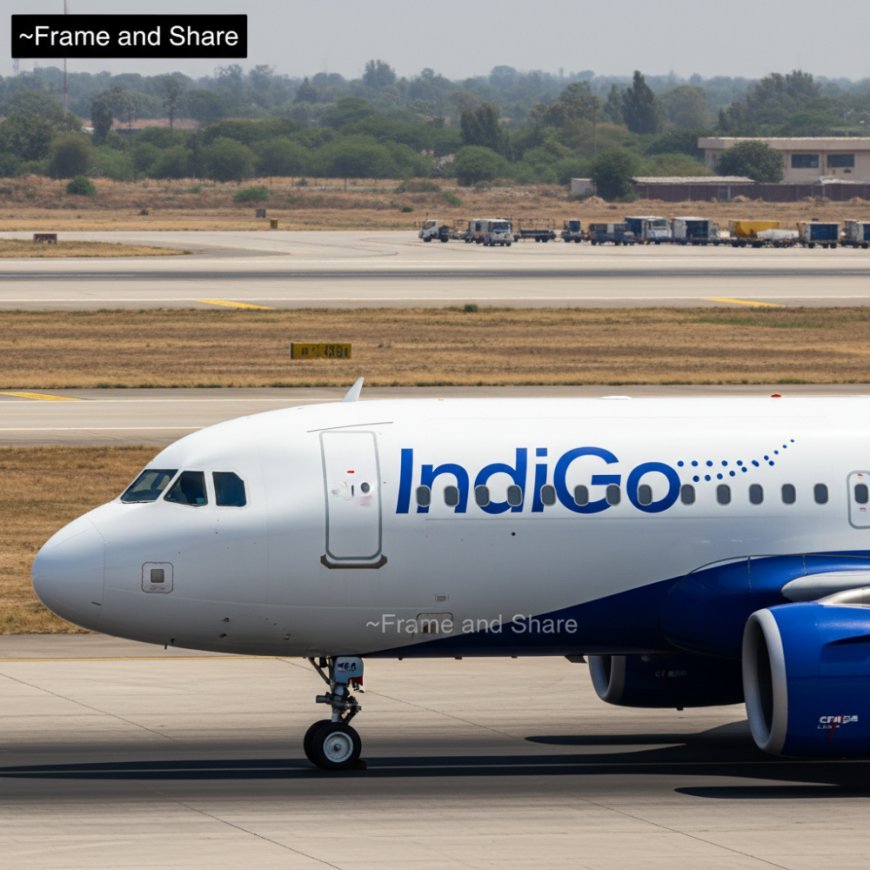


A Routine Flight Turned Nightmare
In yet another concerning incident for Indian aviation, a routine international journey turned into a high-stakes security operation on Friday, January 30, 2026. An IndiGo airlines flight, ferrying 186 souls from Kuwait to New Delhi, was forced to make an emergency diversion to Ahmedabad after a chilling threat was discovered mid-air.
The incident has once again highlighted the fragility of air travel peace and the robust, albeit nerve-wracking, security protocols that kick into gear when the safety of passengers is threatened. What was supposed to be a standard landing in the national capital ended with passengers surrounded by bomb disposal squads and security personnel on a remote tarmac in Gujarat.


The Incident: Panic at 30,000 Feet
The flight in question was operating its scheduled route from Kuwait City to New Delhi. On board were 180 passengers and 6 crew members, unaware that their journey was about to be abruptly halted.


According to airport officials, the alarm was raised when a handwritten note was discovered inside the aircraft. The note, scrawled ominously on a piece of tissue paper, contained explicit threats regarding a "bomb" and a "hijacking."
The discovery of the note immediately triggered standard emergency operating procedures. The flight crew, trained to handle such high-pressure scenarios, alerted the pilots, who then communicated the "Red Alert" status to Air Traffic Control (ATC). Given the severity of the threat—specifically the mention of hijacking—the decision was made not to proceed to the busy airspace of Delhi but to divert immediately to the nearest capable airport, which was Sardar Vallabhbhai Patel International Airport in Ahmedabad.
Emergency Landing and Rapid Response
The aircraft touched down in Ahmedabad under tense conditions. Authorities on the ground were already prepared for the worst. The Aviation Security Group (ASG), Central Industrial Security Force (CISF), and local police had cordoned off a remote bay to isolate the aircraft from the main terminal and other planes.
Inspector N.D. Nakum of the Airport Police Station confirmed the sequence of events, stating that security agencies swung into action the moment the threat was communicated.
"As soon as the bomb threat information was received, all relevant security agencies were alerted. The Bomb Disposal Squad (BDS) was immediately deployed to thoroughly inspect the aircraft." Inspector N.D. Nakum.
The Safety Protocols: Evacuation and Search
Upon landing, the priority was the safe evacuation of the 186 people on board. Passengers were deplaned in a controlled manner and moved to a secure holding area within the airport. While the atmosphere was undoubtedly tense, reports indicate that the evacuation was completed without any injuries or panic-induced stampedes.
Once the aircraft was empty, a multi-layered search operation commenced. This involved:
-
The Bomb Disposal Squad (BDS): To sweep for explosives.
-
The Dog Squad: Specially trained canines to sniff out volatile substances.
-
CISF and Airport Security: To manually inspect luggage and the cabin.
After hours of rigorous checking, officials breathed a sigh of relief. No suspicious items or explosives were found on the aircraft. The threat, appearing on a flimsy piece of tissue paper, turned out to be a hoax a malicious act designed to cause chaos.
Investigation: Who Wrote the Note?
While the immediate physical danger has passed, the legal and forensic investigation is just beginning. Security agencies are now focusing on the origin of the handwritten note.
The key questions facing investigators are:
-
Who placed the tissue paper there? Was it a passenger currently on board, or was it left over from a previous leg of the journey?
-
Handwriting Analysis: Forensic experts are likely to analyze the handwriting on the tissue to match it with passenger declarations or other documents.
-
CCTV Scrutiny: Although there are no cameras inside the lavatories (where such notes are often found), cabin crew testimony and passenger behavior will be scrutinized to identify suspects.
Authorities have stated that strict legal action will be taken against the perpetrator. In recent years, aviation laws in India have been tightened, and those found guilty of making hoax bomb threats face severe penalties, including imprisonment and being placed on the devastating "No-Fly List."
A Persistent Menace
This incident adds to a growing list of hoax bomb threats that have plagued Indian carriers in recent years. While the robust response of the security agencies ensures passenger safety, these hoaxes cause massive financial losses to airlines and significant trauma to passengers.
As the passengers of the Kuwait-Delhi flight finally resume their journey or find alternative transport, the incident serves as a stark reminder: in the world of aviation security, even a scrap of tissue paper is treated as a matter of life and death.