Saudi Defense Minister’s Secret Warning: Inaction on Iran Could Backfire
Exclusive reports reveal Saudi Prince Khalid bin Salman privately warned US officials that failing to strike Iran after threats would embolden the regime, contradicting Riyadh's public calls for restraint.
 frame and share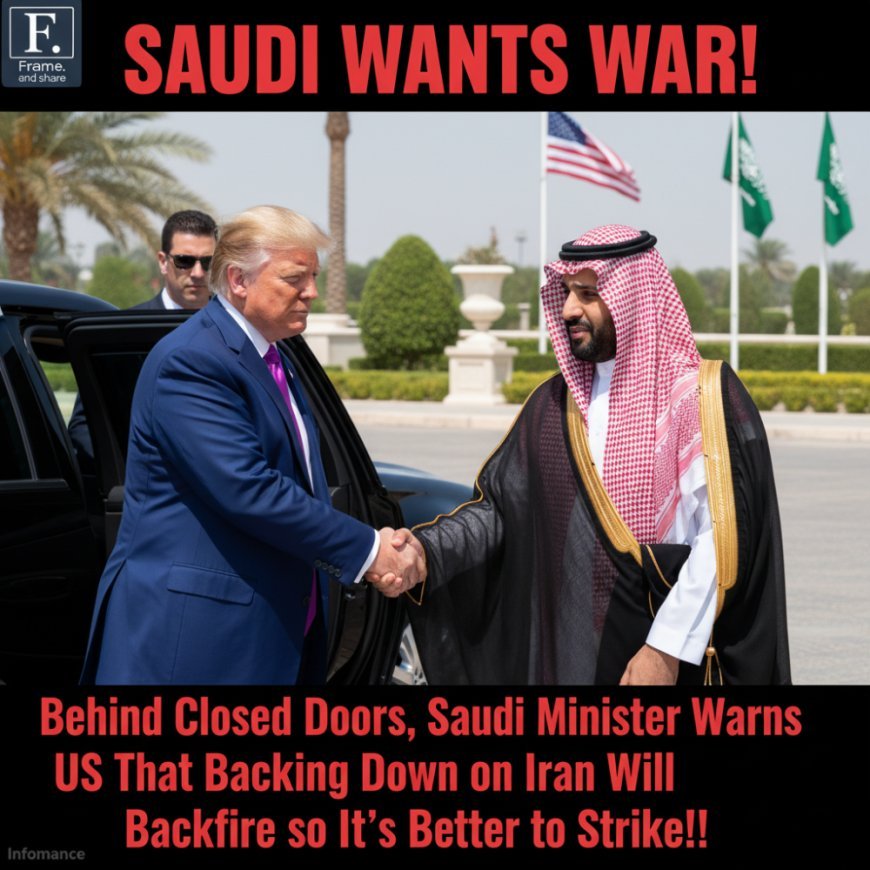


The Double Game? Saudi Prince Privately Warns US: Inaction on Iran Will "Embolden the Regime"
WASHINGTON D.C. — In the high-stakes theater of Middle Eastern geopolitics, what is said behind closed doors often matters far more than public press releases. This axiom was proven true once again this weekend as explosive reports emerged regarding a secret message delivered by Saudi Arabia’s Defense Minister, Prince Khalid bin Salman, to top US officials.




While the Kingdom of Saudi Arabia has publicly urged "maximum restraint" to avoid a catastrophic regional war, leaked details from a private briefing in Washington suggest a very different narrative is unfolding in the shadows. According to a report by Axios published on January 31, 2026, Prince Khalid bin Salman (KBS) warned the Trump administration that if the United States fails to follow through on its recent military threats against Iran, the regime in Tehran will emerge "stronger" and more dangerous than ever.
The Private Warning: "If This Doesn't Happen..."
The revelation comes from a closed-door briefing held on Friday, January 30, 2026, attended by a select group of think tank experts and officials in Washington. During this session, Prince Khalid reportedly offered a candid assessment of the current standoff between Washington and Tehran.
According to sources present in the room, the Prince’s message was stark. He argued that after weeks of aggressive rhetoric and military buildup by President Donald Trump, a failure to act would be interpreted as weakness by the Iranian leadership.
"At this point, if this [military action] doesn't happen, it will only embolden the regime," Prince Khalid is reported to have said.
This statement implies a fear that a US "bluff" could be more damaging to regional security than the conflict itself. If Iran believes the US has lost its appetite for enforcement, it could accelerate its nuclear program or unleash its proxy militias across the region with impunity.
A Sharp Contrast: The Public Face of Diplomacy
This private admission stands in sharp contrast to Saudi Arabia’s official diplomatic posture. Publicly, Riyadh has been the voice of caution. Fearing that their ambitious "Vision 2030" economic reforms could be derailed by Iranian missiles raining down on Saudi cities and oil infrastructure, Saudi officials have spent weeks lobbying for de-escalation.
Just days before this private briefing, Saudi Crown Prince Mohammed bin Salman (MBS) reportedly told Iranian President Masoud Pezeshkian in a phone call that the Kingdom would not allow its airspace to be used for any US attacks on Iran. This public assurance was intended to shield Saudi Arabia from retaliatory strikes by Tehran.
However, the leaked private comments suggest that Riyadh is trapped in a strategic dilemma. They fear the physical cost of a war, but they perhaps fear the geopolitical cost of a surviving, unpunished, and emboldened Iran even more.
High-Stakes Meetings in Washington
Prince Khalid’s visit to Washington came at a pivotal moment. Tensions are at a boiling point, with President Trump announcing the deployment of a "massive armada" to the region. During his trip, the Saudi Defense Minister held high-level meetings with key figures in the Trump administration, including:
Secretary of State Marco Rubio
Defense Secretary Pete Hegseth
White House Envoy Steve Witkoff
Sources indicate that Prince Khalid left these meetings somewhat uncertain about the administration's ultimate strategy. The mixed signals from the White House—oscillating between threats of "obliteration" and offers for "a deal"—have seemingly left Gulf allies anxious about whether the US has a clear endgame.
The "Paper Tiger" Fear
The core of Prince Khalid’s warning touches on a long-standing anxiety among Gulf Arab states: the reliability of American security guarantees. If the US positions an armada off the coast of Iran and issues ultimatums, only to back down without extracting significant concessions, the deterrence factor of the US military evaporates.
For Saudi Arabia, this is a nightmare scenario. An emboldened Iran, convinced that the US is a "paper tiger," would likely ramp up its support for Houthis in Yemen and militias in Iraq and Syria, tightening the noose around the Kingdom.
Official Denials and Damage Control
As expected, the publication of these private remarks caused immediate diplomatic friction. On Sunday, February 1, a senior Saudi official issued a firm denial to the Saudi-owned newspaper Asharq Al-Awsat. The official termed the reports of a shift in stance as "inaccurate" and reiterated that the Kingdom is committed to dialogue and political solutions.
"Saudi Arabia is categorically opposed to the use of its airspace or land for any military action against Iran," the official stated.
This denial is standard diplomatic protocol. Riyadh cannot afford to be seen publicly cheering for war against a neighbor that possesses thousands of ballistic missiles capable of reaching Riyadh and Dubai in minutes. The "denial" allows them to maintain a working relationship with Tehran while privately pushing the US to ensure Iran is checked.
What Happens Next?
As of Monday, February 2, 2026, the region remains on a knife-edge. Reports suggest that mediators from Turkey, Egypt, and Qatar are scrambling to organize emergency talks between US and Iranian officials in Ankara.
President Trump has indicated openness to talks, stating, "Hopefully we'll make a deal." However, with the Saudi Defense Minister’s warning echoing in the halls of the White House, the pressure is on the administration to ensure that any "deal" does not look like a surrender.
For the world, the coming days will determine whether the Middle East plunges into another devastating conflict or finds a fragile new equilibrium. For Saudi Arabia, the goal remains survival—navigating the dangerous waters between an unpredictable American ally and a hostile Iranian neighbor.