Sheikh Hasina Jailed for 10 Years: Purbachal Scandal Verdict & Political Fallout
In a major blow to the Awami League, a Dhaka court has sentenced ousted Prime Minister Sheikh Hasina to 10 years in prison over the Purbachal plot scandal. Her UK MP niece Tulip Siddiq also faces jail time. Read the full details of the verdict and its impact on Bangladesh's upcoming elections.
 frame and share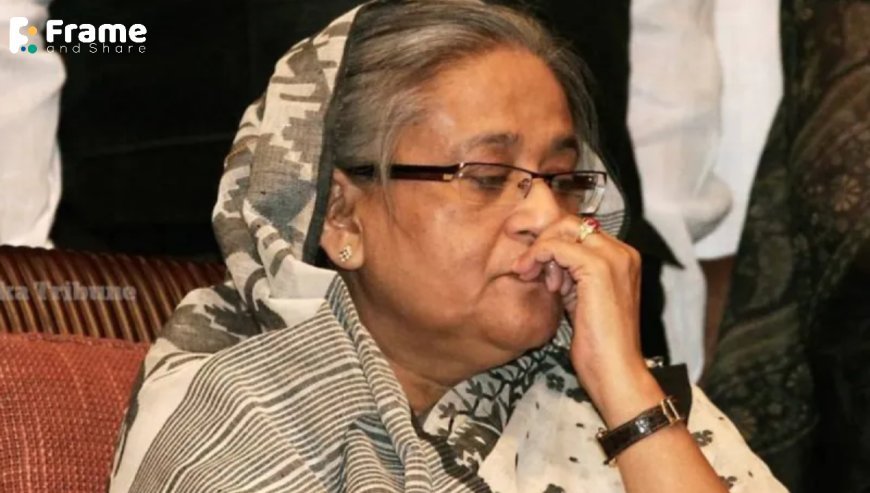


A Legal Blow to the Fallen Leader
In a landmark verdict that has sent shockwaves through South Asian politics, a special court in Dhaka has sentenced former Bangladesh Prime Minister Sheikh Hasina to 10 years of rigorous imprisonment. The judgment, delivered on Monday, February 2, 2026, pertains to the notorious Purbachal plot scandal, involving high-level corruption and the illegal allocation of state land.
This verdict comes as a significant development in the ongoing legal crackdown against the ousted Awami League leadership by the interim government led by Nobel laureate Muhammad Yunus. With Hasina currently living in exile in India following the student-led uprising of August 2024, the ruling further complicates any potential political comeback for the 79-year-old leader.


The Purbachal Plot Scandal: What is the Case?
The case centers on irregularities in the Rajuk New Town Project in Purbachal, a satellite town on the outskirts of Dhaka. The Anti-Corruption Commission (ACC) of Bangladesh alleged that during her tenure, Sheikh Hasina abused her power to illegally allocate high-value residential plots to herself and her close family members, bypassing state rules and eligibility criteria.


Key Details of the Verdict:
-
Sheikh Hasina: Sentenced to 10 years in prison (two concurrent 5-year terms in separate cases).
-
Tulip Siddiq (Niece): The British Member of Parliament (Labour Party) and niece of Hasina has been sentenced to 4 years in prison (2 years for each case).
-
Other Family Members: Hasina’s nephew Radwan Mujib Siddiq and niece Azmina Siddiq were each handed 7-year prison terms.
Judge Md Rabiul Alam of the Dhaka Special Judge Court-4 delivered the verdict, stating that the accused had manipulated the allocation process for personal gain. The court also imposed fines on the convicts, warning that failure to pay would result in extended imprisonment.
Tulip Siddiq: A Global Controversy
One of the most startling aspects of this verdict is the conviction of Tulip Siddiq, a sitting Member of Parliament in the United Kingdom. The court found her guilty of being a beneficiary of the illegal land allotment.
Tulip Siddiq, who has previously served as a minister in the UK government, has strongly denied the charges. In a statement to international media, she labeled the proceedings as "flawed and farcical," claiming she had no knowledge of the plots allocated in her name and was never served a summons. "I am absolutely baffled by the whole thing. I have had no contact from Bangladeshi authorities," she reportedly said. This conviction is likely to create diplomatic friction between Dhaka and London.
Context: The Post-2024 Political Landscape
This sentencing is part of a broader wave of legal actions following the dramatic fall of the Hasina government on August 5, 2024. After weeks of violent student-led protests, Hasina fled to India, ending her 15-year iron-fisted rule.
Since then, the interim government has initiated numerous cases against her, ranging from corruption to crimes against humanity.
-
Previous Convictions: Just months prior, in late 2025, Hasina was sentenced to 26 years in prison in four other graft cases.
-
Death Sentence: A special tribunal has already handed her a death sentence in absentia for the brutal suppression of protesters during the July 2024 uprising.
Impact on Upcoming Elections
The timing of the verdict is critical. Bangladesh is gearing up for its first general election since the revolution, scheduled for February 12, 2026.
-
Awami League Sidelined: With its top leadership either in jail or exile, and the party facing potential bans, the Awami League is effectively out of the electoral race.
-
BNP Resurgence: The vacuum has paved the way for the Bangladesh Nationalist Party (BNP), led by Tarique Rahman (who recently returned from exile), to make a strong bid for power.
The End of an Era?
The sentencing of Sheikh Hasina to another decade in prison underscores the depth of the political reset in Bangladesh. For the interim government, this is a step toward accountability and "cleaning up" the state apparatus. However, for Hasina's supporters, it is seen as political vendetta.
As the former Prime Minister remains in India, the execution of this sentence depends heavily on extradition treaties and diplomatic negotiations a scenario that remains uncertain. For now, the "Iron Lady" of Bangladesh remains a fugitive in the eyes of the law she once commanded.