Taj Mahal Cow Urine 'Purification' Bid Fails; Leader Detained
A Hindu organization's attempt to 'purify' the Taj Mahal with cow urine during Mahashivratri, citing the Tejomahalaya controversy, was foiled by Agra Police, leading to detentions.
 frame and share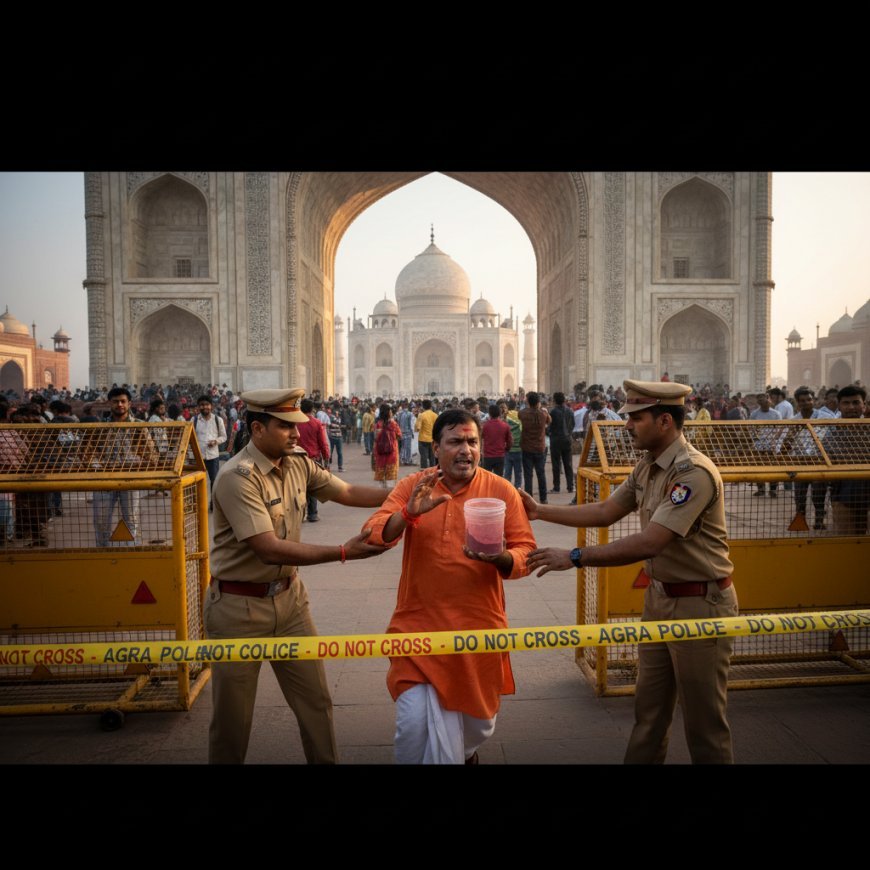


Agra witnessed high drama on the auspicious occasion of Mahashivratri as a scheduled attempt by members of a Hindu organization to 'purify' the Taj Mahal with cow urine was thwarted by swift police action.
Controversy Escalates: Taj Mahal vs. Tejomahalaya
The long-standing controversy surrounding the iconic monument stems from persistent claims by certain groups that the structure, officially recognized globally as the Taj Mahal, is in fact an ancient Shiva temple known as Tejomahalaya. This belief has fueled periodic demands for allowing Hindu rituals and access to the premises.


According to local reports from Agra, the organization planned to utilize Mahashivratri—a significant Hindu festival—as the opportune moment to perform a symbolic purification ritual using Gomutra (cow urine) on the premises, aiming to symbolically reclaim the site in the eyes of their followers.


Police Intervention and Detainment
Anticipating potential law and order disturbances, Agra Police maintained strict vigilance around the monument throughout the day. As the activists approached the premises with containers prepared for the ritual, they were met with stringent barricading and heavy police deployment.
The situation quickly escalated when a prominent official of the organization attempted to breach the security cordon. The individual was immediately detained by police officials and subsequently transported to the local police station for questioning and preventive custody to prevent further unrest. Authorities confirmed that the situation remains under control and access to the monument for regular tourists was not significantly disrupted.
Authorities emphasized that historical sites like the Taj Mahal are protected under stringent conservation rules, and any attempt to perform unauthorized rituals or cause disturbances will be dealt with severely. This incident highlights the ongoing tensions surrounding the site's identity, which continues to be a flashpoint between historical preservation mandates and religious claims.