The Ultimate Betrayal: How Mobile Phones & a CIA Spy Led to Khamenei's Assassination
Discover the explosive inside story of how Israeli and US intelligence used hacked Tehran traffic cameras, tracked mobile phones, and a CIA spy inside Khamenei's security detail to execute the decapitation strike on Iran's leadership.
 frame and share


The Ultimate Betrayal: How Hacked Phones, Traffic Cameras, and a CIA Spy Brought Down Tehran’s Leadership
In what is already being analyzed as one of the most remarkable and devastating intelligence coups in modern military history, the assassination of Iran's Supreme Leader, Ayatollah Ali Khamenei, was not merely a display of brute aerial firepower. The decisive decapitation strike that dismantled Tehran's top leadership during the peak of the 2026 Israel-Iran war was the culmination of years of meticulous digital espionage, fatal security oversights, and a shocking human betrayal.
According to emerging reports from global intelligence sources, the operation relied on a lethal combination: hacked municipal traffic cameras, the tracked mobile phones of low-level security personnel, and a CIA informant deeply embedded in Khamenei’s inner circle his own bodyguard. Here is the detailed breakdown of how the US and Israel infiltrated the most secure fortress in the Middle East.


The Fatal Flaw: The Mobile Phone Loophole
For years, the Islamic Revolutionary Guard Corps (IRGC) and Iranian intelligence agencies had been deeply paranoid about electronic surveillance. Following a wave of high-profile assassinations of nuclear scientists and military commanders, Tehran implemented strict protocols. By the summer of the previous year, Iran had officially banned all senior government VIPs, military commanders, and the Supreme Leader from carrying mobile phones or any trackable electronic devices.


However, the security apparatus left a glaring, fatal vulnerability in their protocol. While the VIPs were stripped of their devices, the ban was not strictly enforced on the lower-ranking members of their entourages—specifically, the bodyguards and drivers.
Israeli intelligence quickly realized that they did not need to track the Supreme Leader directly; they only needed to track the men who surrounded him. By penetrating the mobile phone networks, Mossad began tracing the digital footprints of Khamenei's security detail. The bodyguards, who occasionally used their phones for personal communication or social media, unknowingly broadcasted the movements of Iran's highest-ranking officials directly to Tel Aviv.
Hacking the Panopticon: Tehran’s Traffic Cameras
Tracking mobile phones was only one piece of the puzzle. To build a comprehensive "pattern of life" dossier, Mossad executed a massive cyber operation to co-opt the Iranian state's own surveillance apparatus.
Years prior to the strike, Israeli cyber units successfully hacked into Tehran’s extensive network of closed-circuit television (CCTV) and traffic cameras. These cameras, originally installed by the Iranian regime to monitor its citizens and track down protesters, were now being used against the state.
One camera proved particularly devastating. Positioned on Pasteur Street the highly fortified area housing the Supreme Leader’s compound and an underground bunker—the camera was angled perfectly to show where Khamenei’s elite security team parked their personal vehicles. Through these hijacked lenses, the IDF's elite Unit 8200 used advanced Artificial Intelligence (AI) algorithms to sift through mountains of data. They mapped out the guards' addresses, shift changes, daily routines, and precisely which officials they were assigned to protect.
The Enemy Within: A CIA Spy in the Inner Circle
While technology provided the blueprint, the final execution required human verification. The bunker beneath Pasteur Street was reportedly located 100 feet underground, featuring blast doors and an elevator that took five minutes just to reach the bottom. A blind airstrike could easily miss the narrow window of opportunity.
This is where the Central Intelligence Agency (CIA) played its critical role. Reports indicate that the CIA had successfully recruited a human asset operating at the absolute highest level of Iranian security: a bodyguard within Khamenei’s intimate protection detail.
This embedded spy was the linchpin of the operation. On the morning of the attack, it was this CIA informant who confirmed the exact timing. He verified that the Supreme Leader, along with other senior civilian and military leaders, had actively convened inside the residential compound's bunker. This human intelligence gave the Israeli Air Force the absolute certainty needed to launch the strike.
The Execution: Signal Jamming and the Precision Strike
With the target confirmed by the CIA spy and tracked via Mossad's digital dragnet, the US and Israel initiated the final phase of the operation.
On the Saturday morning of the strike, intelligence agencies executed a targeted electronic warfare attack. They deliberately disrupted cellular service and jammed the mobile phone towers surrounding Pasteur Street. As Israeli fighter jets entered Iranian airspace, the jamming ensured that anyone attempting to call Khamenei's bodyguards to deliver an early warning received nothing but busy signals or dead air.
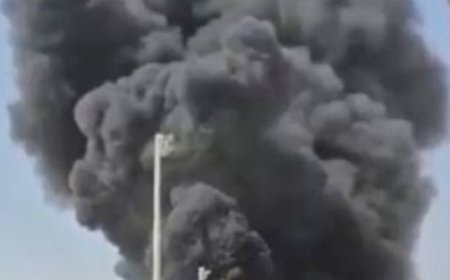
Moments later, a barrage of precision-guided bunker-buster bombs rained down on the compound. The strikes specifically targeted the entrance and exit doors, cutting off airflow and completely sealing the underground facility. The Supreme Leader, who had ruled the Islamic Republic since 1989, was eliminated in a matter of seconds.
Conclusion: A Catastrophic Security Failure
The assassination of Ayatollah Ali Khamenei exposes a catastrophic structural failure within Iran's intelligence and security apparatus. It proves that in the era of modern warfare, physical bunkers offer no protection if the digital perimeter is breached. The combination of arrogant security loopholes (allowing guards to carry phones), the weaponization of Iran's own surveillance cameras, and a devastating human betrayal has irreparably altered the geopolitical landscape of the Middle East.