Macron's India Visit: Why China, Pakistan, and the US Are Watching
French President Macron's strategic visit to India focuses on defense and AI. As an 'evergreen friend,' this partnership is under intense scrutiny from Beijing, Islamabad, and Washington.
 frame and share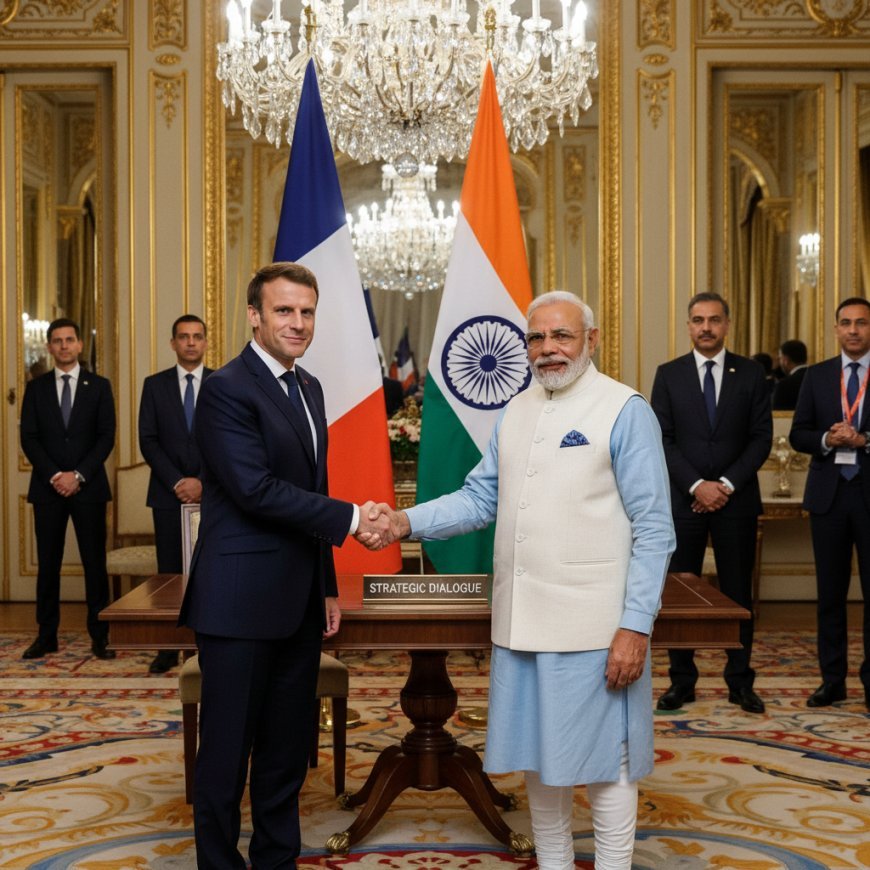
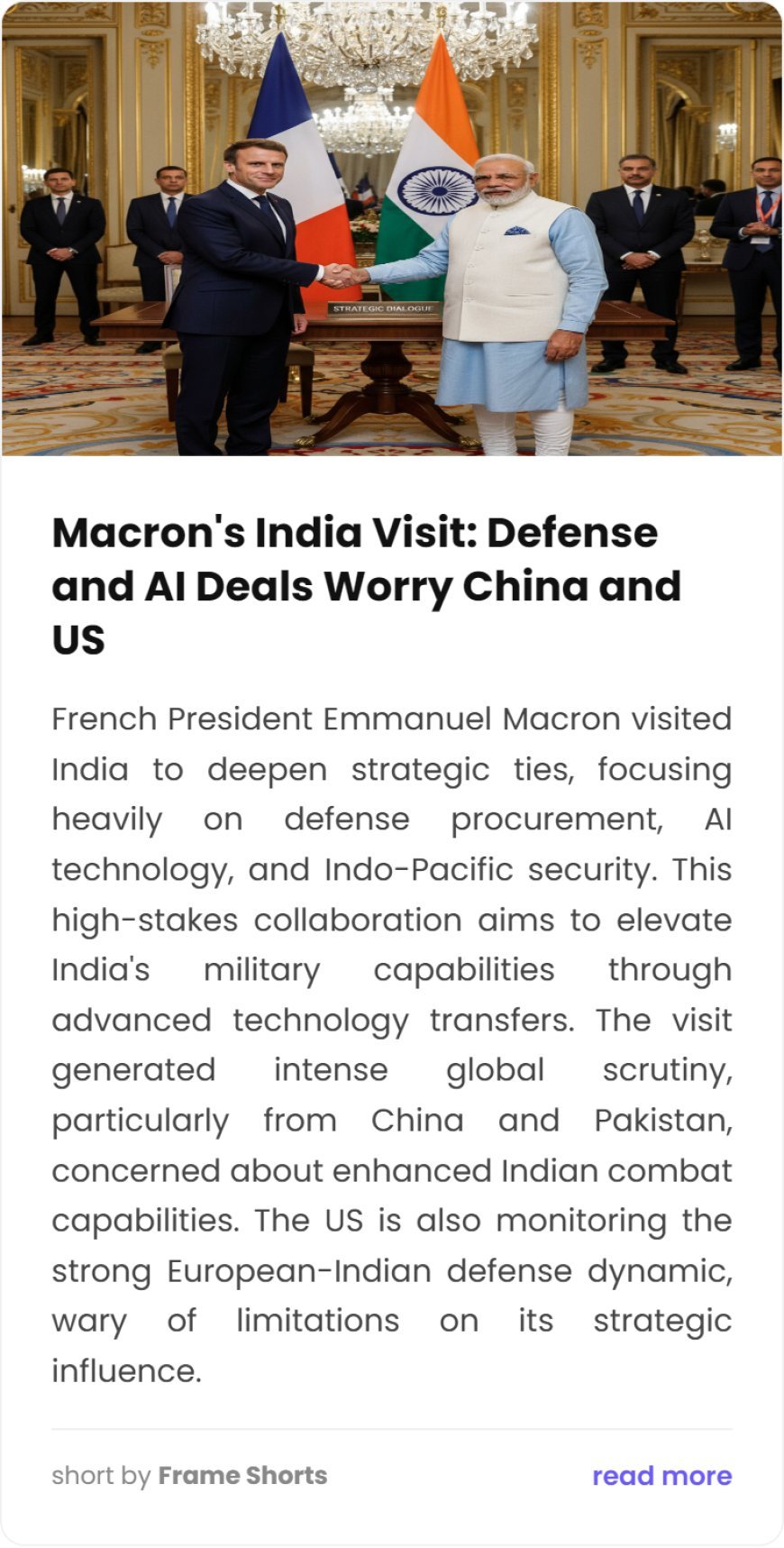


French President Emmanuel Macron is undertaking a high-stakes official visit to India, scheduled from February 17 to 19. As one of India’s most reliable European allies, often dubbed the 'Rafale buddy,' Macron’s fourth trip and first time visiting the financial capital Mumbai to meet Prime Minister Modi is generating intense scrutiny across global capitals, particularly in Beijing, Islamabad, and Washington.
Deepening the Strategic Core: Defense and AI
This visit comes at a critical juncture where defense collaboration and cutting-edge AI technology dominate the global strategic agenda. Macron is set to meet Prime Minister Narendra Modi, underscoring the shift towards commercial and economic hubs in diplomatic engagement. The primary focus remains the robust defense partnership, solidified by the landmark Rafale deal. Discussions are expected to center on future defense procurement, including naval platforms and advanced technology transfers, which are vital for India’s military modernization efforts.


France views India not just as a major customer but as a strategic partner crucial for maintaining stability in the Indo-Pacific. By prioritizing cooperation in emerging technologies like AI, both nations are signaling a long-term commitment that transcends transactional arms deals. This technological depth is what elevates the stakes for rival powers.


Washington’s Unease: The Shadow of Geopolitics
While the US remains India's key security partner, Washington is watching the India-France dynamic closely. At the time of this visit, friction existed between President Macron and then-American leadership (following reports of then-President Donald Trump's reported frustration over Macron's stance on issues like Greenland). France’s independent foreign policy, aiming to establish Europe as a global third pole of power, means that Paris choosing to bolster ties with Delhi at this time is a subtle but powerful statement about global alignment outside the immediate US orbit. The US seeks Indo-Pacific stability but remains wary of strong European-Indian defense ties that could limit American commercial and strategic leverage.
China and Pakistan: Observing Enhanced Capabilities
The deepest geopolitical anxiety over this visit, however, resides in Beijing and Islamabad. For Pakistan, the consistent enhancement of India's combat capabilities, particularly through high-end French technology, poses a direct security concern. The integration of advanced French systems into the Indian Armed Forces significantly strengthens India’s deterrent posture along its borders and enhances its readiness in the event of conflict.
China, aiming for regional dominance, views the strengthening of the India-France strategic axis with profound caution. France's increasing interest in the Indo-Pacific maritime domain a concept fiercely resisted by Beijing combined with sophisticated defense sales to a primary regional rival, challenges China's strategic calculations. Any major deal announced during this visit signals a robust commitment by a key NATO power to India’s security architecture, limiting China’s strategic maneuvering room.
Macron’s visit is, therefore, more than a bilateral meeting; it is a clear reflection of a changing world where influential nations are actively selecting and deepening their core strategic alliances. The outcome of the Delhi-Paris dialogue will reverberate across continents, setting new standards for defense, technology, and geopolitical cooperation in a multi-polar era.