From Air Pistol to ‘Terror Plot’: Anatomy of Manufactured Fear
A bag with an air pistol at a BJP MLC's office in Sambhajinagar sparked claims of a 'terror plot' and communal blame. The truth exposed a simple, negligent act.
 frame and share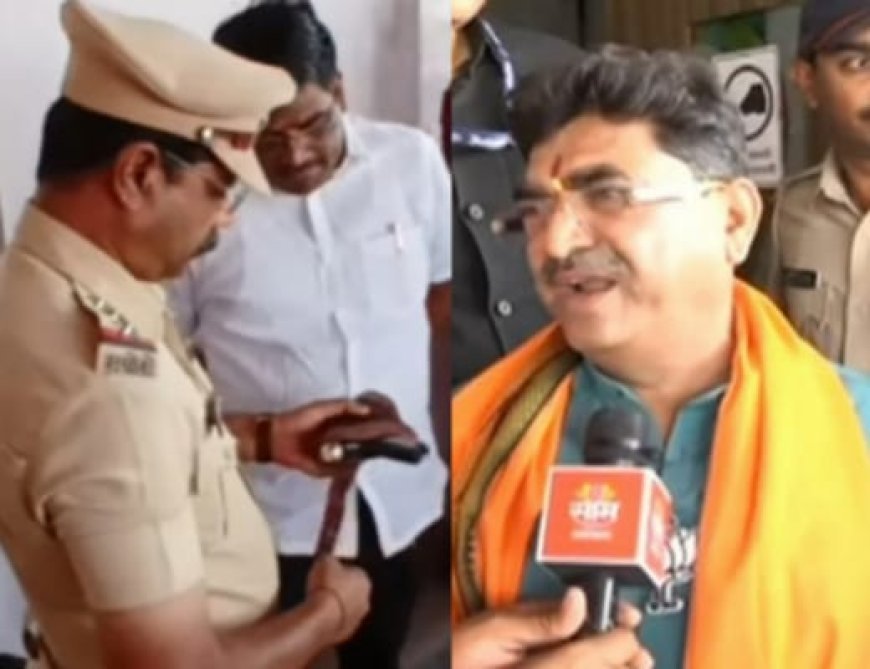


The political drama that unfolded at Kranti Chowk in Chhatrapati Sambhajinagar late last week serves as a stark case study in the rapid acceleration of accusation over evidence. What began with the discovery of a discarded bag containing an air pistol at the contact office of BJP MLC Sanjay Kenekar quickly spiralled into a high-octane ‘terror plot,’ exposing the dangerous ease with which fear is manufactured in today’s political landscape.
The Anatomy of Instant Blame
The incident, simple in its premise a bag left mysteriously overnight triggered an immediate and disproportionate response. Before any official police investigation could establish facts, the narrative was already constructed. Journalists arrived before the police, and in front of the cameras, the response from political figures swiftly shifted away from the item found and towards ideological positioning.


References were instantly drawn to loaded topics like “cow slaughter” and “love jihad,” intentionally steering public suspicion toward a specific community. Despite the impending police probe and the presence of CCTV footage, restraint was abandoned in favor of a pre-determined narrative: “an attempt is being made to intimidate me.” This calculated response turned a potential negligent act into a politically charged claim of terror, heating the atmosphere without a shred of evidence.
Reality Checks: A Negligent Act, Not UAPA Territory
The inevitable police investigation brought the manufactured narrative crashing back to reality. The accused was not, as insinuated, from the community targeted by early suspicion. He was identified as Ritesh Santosh Holkar, a local non-Muslim youth. The grand claims of a sophisticated terror operation were debunked; the act was reckless, not revolutionary.
Crucially, the subsequent legal action underscored this difference. The case was registered not on the MLA’s urgent complaint, but on that of Police Head Constable Bhaskar Narwade. The charge applied was minor: BNS Section 125, related to a negligent act endangering human life. The stringent anti-terror provision, UAPAct Section 16, was notably absent, raising pertinent questions: if the incident was truly an “attempt to create terror,” why was the maximum legal provision not utilized? And would the choice of sections have been the same had the accused belonged to the community initially blamed?
The Media’s Role: The Silence of Fact
The scrutiny must extend beyond political rhetoric to the media’s handling of the crisis. When the initial allegations of terror and communal links were made, the airwaves were dominated by live broadcasts, breaking news alerts, and intense, polarized debates. Yet, when the unexciting truth that the perpetrator was a local youth and the charge minor emerged, the widespread coverage vanished.
This incident at Kranti Chowk is less about an air pistol and more about a systemic mindset: one that prioritizes drawing conclusions for political sympathy, targets vulnerable communities for quick gain, and then quietly changes the subject once reality interferes. The words of public representatives are powerful tools. This episode starkly illustrates the difference between exercising that power to build trust and wielding it simply to spread fear and division. The question remains: Are we committed to the politics of evidence, or the loud, dangerous politics of suspicion?