India's Debt Triples: Supreme Court Questions 'Freebie Culture'
Despite Supreme Court warnings on 'Revari Culture,' India's per capita debt has tripled in nine years, raising concerns about fiscal responsibility and future burdens.
 frame and share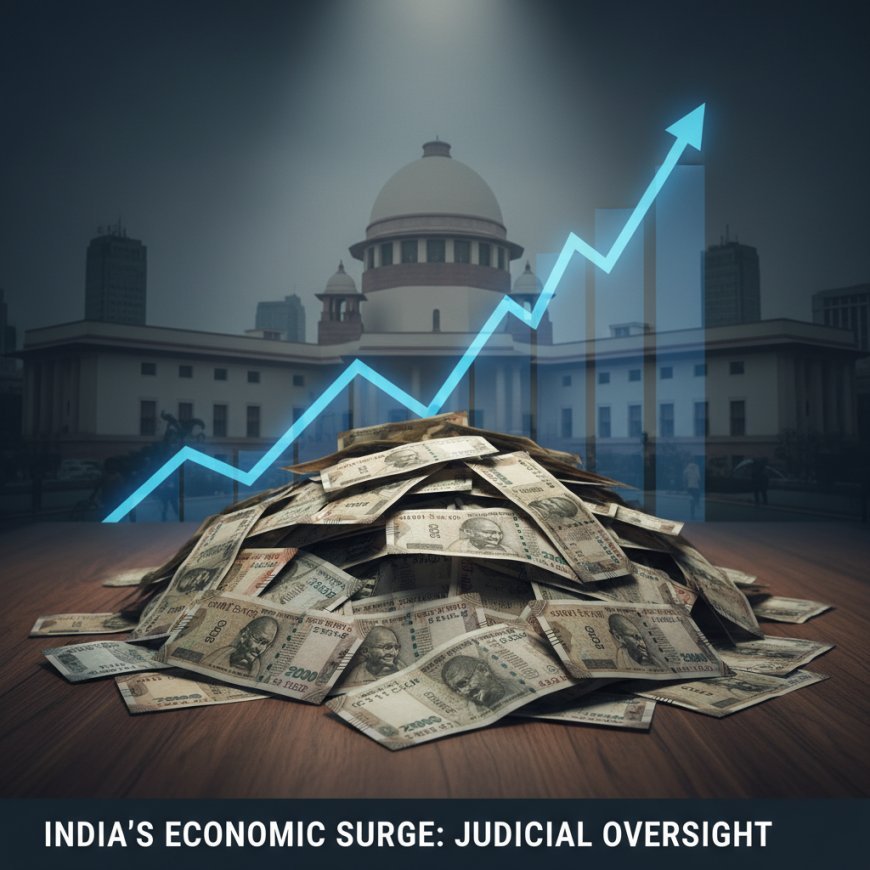


New Delhi: A recent report highlighting a threefold increase in the per capita debt of every Indian over the past nine years has intensified concerns about the nation's fiscal health. This alarming revelation comes amidst the Supreme Court of India's repeated questioning of what it terms the 'Revari Culture' – the practice of political parties doling out freebies.
The apex court, which had first urged action against the 'freebie culture' in 2022, has once again expressed its dismay, asking, "What kind of culture is this?" The judiciary's continued intervention underscores a growing tension between populist government policies and long-term economic sustainability.


Mounting Debt: A Staggering Increase
The data points to a dramatic surge in the financial burden on individual citizens. In just under a decade, the debt attributed to each Indian has reportedly tripled, painting a stark picture of the national exchequer's expanding liabilities. This increase is a significant indicator of the government's borrowing patterns, which are often used to fund welfare schemes, infrastructure projects, and manage fiscal deficits.


Economists and financial analysts have consistently warned about the dangers of unchecked borrowing. While essential for development and social safety nets, excessive debt can lead to higher interest payments, divert funds from critical sectors, and potentially burden future generations with repayment obligations.
Supreme Court's Persistent Concern over 'Revari Culture'
The Supreme Court's stance against the 'Revari Culture' isn't new. In 2022, the court had proactively called for measures to regulate the distribution of freebies by political parties during election campaigns. The concern stems from the belief that such practices, while politically expedient, can severely strain state finances, distort market competition, and lead to an unsustainable economic model.
The recent reiteration of its concern indicates that the judiciary believes its earlier directives have not been adequately addressed or that the issue persists with significant implications. The court's question, "ये कौन सी संस्कृति है?" (What kind of culture is this?), reflects a deep apprehension about the ethical and economic ramifications of such policies.
The Road Ahead: Balancing Welfare and Fiscal Prudence
The government faces the delicate task of balancing the immediate needs of its populace with long-term fiscal prudence. While welfare schemes are crucial for poverty alleviation and social equity, their funding mechanisms and sustainability are under increased scrutiny, particularly from judicial bodies like the Supreme Court.
Experts suggest that a comprehensive approach is needed, involving transparent financial reporting, robust economic policies, and perhaps a re-evaluation of how freebies are defined and regulated. The dialogue between the judiciary and the executive on this critical issue highlights the need for a national consensus on sustainable economic growth that does not compromise the financial future of its citizens.