"Those Who Can't Hold a Bat Shouldn't Rule": Supreme Court Slams Cricket Administration, Backs Ex-Players
In a scathing remark, the Supreme Court of India has criticized the "club culture" in cricket boards, stating that associations should be run by ex-cricketers, not businessmen or politicians. Read the full report on the MCA poll controversy and the CJI's observations.
 frame and share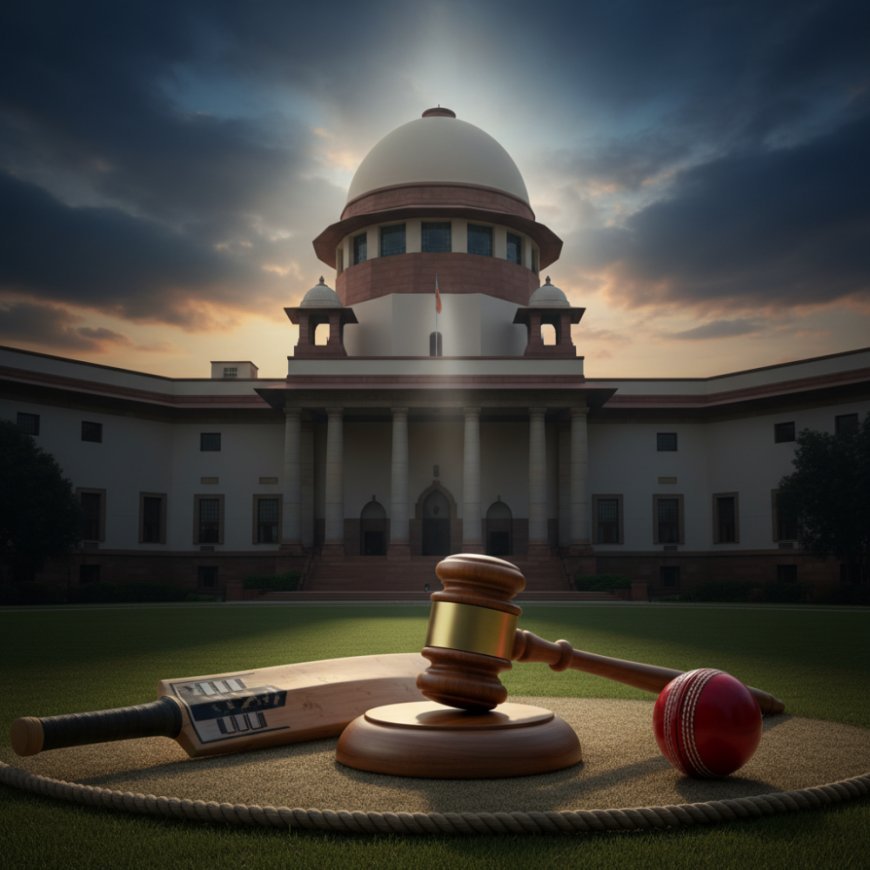


New Delhi: In a significant observation that could ripple across the administrative corridors of Indian sport, the Supreme Court of India has heavily criticized the management structure of state cricket associations. On Tuesday, February 3, 2026, the apex court remarked that cricket bodies are often run by individuals "who do not even know how to hold a bat," sidelining those who have dedicated their lives to the game.
The oral observation came from a bench led by the Chief Justice of India (CJI) during a hearing concerning the Maharashtra Cricket Association (MCA) elections. The court’s comments have reignited the long-standing debate about the role of politicians and businessmen in managing India's most popular sport versus the need for professional, player-led governance.


The Case: MCA's Electoral Tangle
The matter reached the Supreme Court after the Bombay High Court put a stay on the scheduled elections of the Maharashtra Cricket Association. The controversy stems from a decision by the current MCA governing body to massively expand its membership base.


The MCA had proposed increasing its membership from the existing 250 members to over 800. Critics and petitioners argued that this move was not aimed at inclusivity but was a strategic ploy to "gerrymander" the electorate essentially flooding the voter list with loyalists to ensure the current regime's victory in the upcoming polls.

The Bombay High Court, sensing potential irregularities, had stayed the election process. The MCA approached the Supreme Court seeking to lift this stay, hoping to proceed with the polls under the new membership structure.
The Supreme Court's Scathing Remarks
Refusing to interfere with the High Court's interim order, the Supreme Court bench took a grim view of how cricket associations are currently operating. The CJI expressed frustration over the fact that despite years of reform attempts (following the 2016 Justice Lodha Committee recommendations), the "club culture" continues to dominate.
"Why are these associations run by people who do not even know how to hold a bat?" the CJI reportedly remarked. "The administration of the sport should be in the hands of those who understand it the former players who have sweated on the field. Instead, we see a rush for membership by those who treat these bodies as private clubs."
The Bench emphasized that the primary purpose of a cricket association is to nurture talent and manage the sport, not to serve as a power center for non-experts. The court noted that when non-cricketers dominate the voting membership, the focus shifts from cricket development to vote-bank politics.
"Ex-Cricketers Are Begging for Memberships"
One of the most stinging observations from the hearing was regarding the status of former players. The petitioners pointed out that while businessmen and political figures easily secure membership in state associations, former Ranji Trophy and national players often have to "beg" to become members of the very bodies they represented.
The Supreme Court termed this situation "unfortunate," suggesting that ex-cricketers should not just be members but should be at the helm of affairs. This aligns with the spirit of the Lodha reforms, which mandated the inclusion of player associations in the governance structure a directive that many state units have been accused of diluting over the years.
Implications for BCCI and State Units
While the specific order was limited to the Maharashtra Cricket Association, the ripples of the CJI’s comments are likely to be felt in the Board of Control for Cricket in India (BCCI) and other state units.
Strict Scrutiny: Courts may now look more strictly at "membership expansion" drives by state associations, viewing them as attempts to dilute the voting power of genuine stakeholders.
Player Power: The observation emboldens former cricketers to demand a larger say in administration.
Governance vs. Politics: The recurring judicial sentiment is that cricket administration has become a parking spot for political clout, a trend the judiciary seems keen to check.
By refusing to lift the stay on the MCA elections, the Supreme Court has sent a clear message: procedural fairness and the integrity of the voter base cannot be compromised for the sake of holding elections. More importantly, the CJI’s oral remarks serve as a moral indictment of the current system. As the case returns to the High Court for a detailed hearing, the message from Delhi is loud and clear cricket belongs to the cricketers, not the power brokers.