3D-Printed Ear Bones: A Cure for Deafness from South Africa
In a world-first medical triumph, doctors in South Africa have successfully restored hearing using 3D-printed middle ear bones. Learn how this groundbreaking procedure treats conductive hearing loss without electronic implants.
 frame and share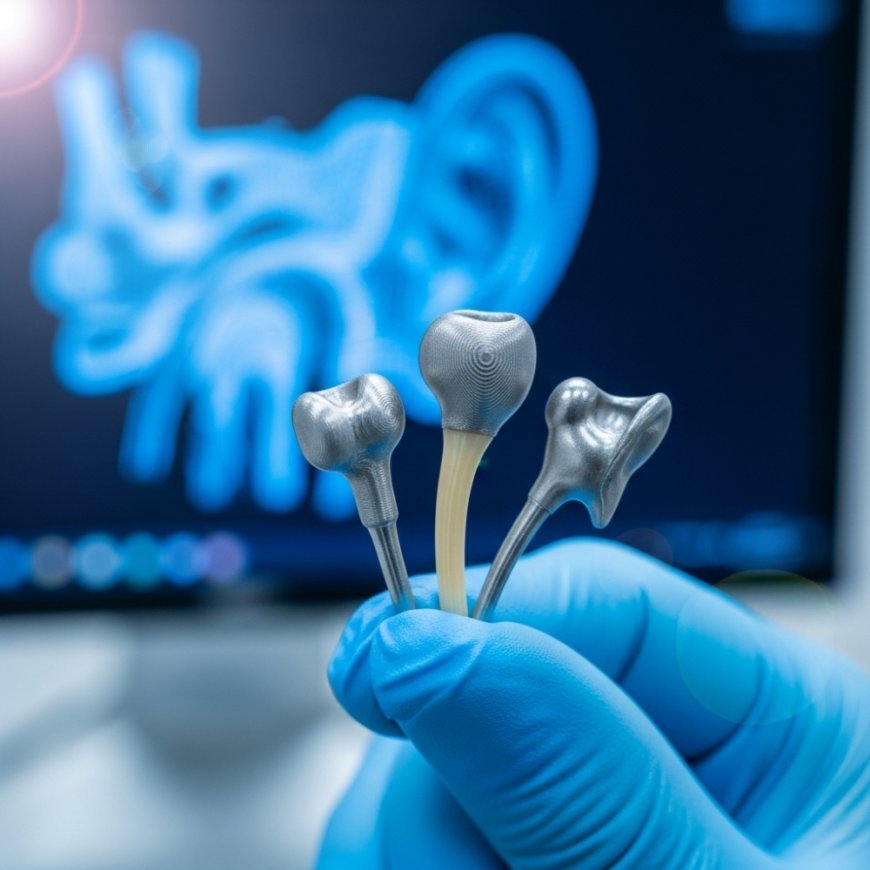


Sound of the Future: South African Doctors Restore Hearing with 3D-Printed Ear Bones
A New Era for the Deaf
In a pioneering surgery that has captured global attention, a team of doctors in South Africa has successfully restored a patient’s hearing using 3D-printed middle ear bones. This procedure, hailed as a world-first, moves beyond the limitations of traditional prosthetics and electronic devices, offering a permanent, biological solution to deafness caused by physical damage.
The surgery targets the ossicles the three tiniest bones in the human body proving that the future of medicine lies not just in treating symptoms, but in rebuilding the human body part by part.


Understanding the Problem: Conductive Hearing Loss
To understand the brilliance of this solution, one must first understand the mechanics of hearing. Sound waves enter the ear canal and vibrate the eardrum. These vibrations are then passed through the middle ear via a chain of three tiny bones known as the ossicles: the malleus (hammer), incus (anvil), and stapes (stirrup).


When these bones are damaged due to trauma, genetic defects, or chronic infections, they cannot transmit sound vibrations to the inner ear. This is known as conductive hearing loss. Traditionally, surgeons have tried to replace these bones with generic titanium implants or donor tissue, but these methods often fail due to poor fit, slippage, or the body rejecting the foreign object.
The Solution: Custom-Made Sound
The South African team approached the problem with 21st-century technology. Instead of a "one-size-fits-all" implant, they utilized 3D printing to create a bespoke solution.
The Process
-
Digital Scanning: The team performed a CT scan of the patient's ear to map the exact geometry of the middle ear cavity.
-
Design: Using Computer-Aided Design (CAD), they modeled replacement bones that were an exact replica of the patient's natural anatomy.
-
Printing: The bones were printed using a biocompatible material (often titanium) that the body is unlikely to reject.
-
Implantation: In a procedure that can be performed endoscopically (minimally invasive), the damaged bones were removed and replaced with the 3D-printed copies.
Why This Is Better Than Cochlear Implants
It is crucial to distinguish this procedure from cochlear implants.
-
Cochlear Implants: These are complex electronic devices used for nerve-related deafness. They bypass the ear's natural machinery to stimulate the auditory nerve directly. They require batteries, external hardware, and extensive rehabilitation.
-
3D-Printed Ossicles: This solution is purely mechanical. It restores the body's natural way of hearing. Once the bones are healed, the patient hears normally without needing any external equipment, batteries, or microphones.
Global Impact: A Scalable Cure
The implications of this surgery extend far beyond a single patient.
-
Accessibility: 3D printing is becoming increasingly affordable. This technique could be deployed in developing regions where expensive electronic implants are unavailable.
-
Precision: By matching the patient's anatomy perfectly, the success rate of the surgery improves dramatically, reducing the need for repeat operations.
-
Hope for Children: This technology is particularly promising for children born with underdeveloped ear bones, offering them a chance at normal hearing and speech development from a young age.
This breakthrough from South Africa is more than just a surgical success; it is a proof of concept for the future of regenerative medicine. By combining digital precision with biological understanding, science has found a way to "print" a cure for one of the most common forms of disability. As this technology scales, the phrase "deafening silence" may soon become a thing of the past for millions.