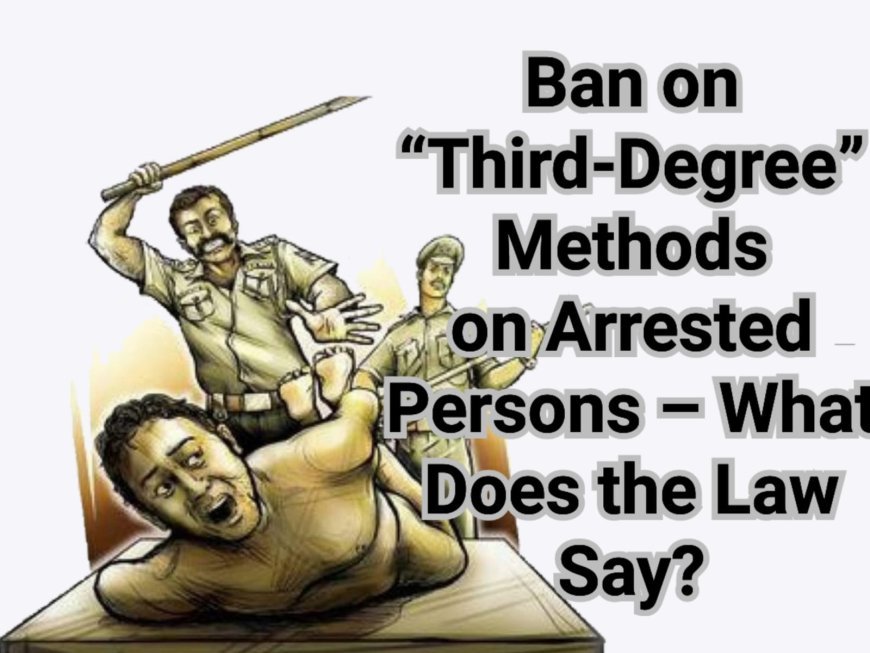
Ban on “Third-Degree” Methods on Arrested Persons What Does the Law Say?
Er M.A.Shakeel. Volunteer International Human Rights Commission (SMS)
 Er. M.A Shakeel


In India’s democratic system, the fundamental rights of citizens hold paramount importance. Even when a person is arrested on suspicion of a crime, their human rights do not cease to exist. For this reason, physical assault, mental harassment, or the use of so-called “third-degree methods” by the police during interrogation has been clearly prohibited by the country’s judicial system.


Clear Directives from the Supreme Court


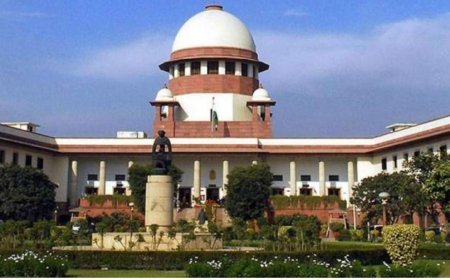
In the landmark case of D.K. Basu v. State of West Bengal, the Supreme Court of India laid down important guidelines to safeguard the rights of arrested persons. The judgment clearly stated that any form of physical or mental torture by the police during interrogation constitutes a violation of human rights.
Similarly, in Joginder Kumar v. State of Uttar Pradesh, the Court emphasized transparency and legality in the process of arrest and stressed that arrest should not be carried out in an arbitrary manner.
Fundamental Rights of an Arrested Person
Under Indian law, a person who has been arrested has several important rights:
Prohibition of third-degree methods – Police cannot use physical or mental torture to extract confessions or information.
Right to remain silent – A person cannot be forced to give statements that may incriminate themselves.
Right to legal counsel – An arrested individual has the right to consult and be defended by a lawyer.
Right to medical examination – A person in custody can request a medical examination by a doctor.
Important Sections of the Old CrPC
Certain provisions in the Old CrPC (Code of Criminal Procedure) provide safeguards for arrested persons:
Old CrPC Section 41A – Provides for issuing a notice of appearance before arrest in certain cases.
Old CrPC Section 50 – Requires the police to inform the arrested person of the grounds of arrest and their right to bail.
Old CrPC Section 54 – Grants the arrested person the right to a medical examination.
Additionally, under the old Indian Penal Code, Section 330 makes it a criminal offense to cause hurt in order to extract a confession or information.
What Happens if Police Violate These Rules?
If police officers violate these legal safeguards or use third-degree methods, they may face serious consequences, including:
Departmental inquiry
Suspension or dismissal from service
Criminal prosecution under applicable laws
Where Can Victims File a Complaint?
Victims of police brutality have several legal avenues to seek justice:
Filing a written complaint with senior police authorities
Approaching the National Human Rights Commission
Filing a complaint before the State Human Rights Commission
Filing a petition in the High Court or the Supreme Court
While submitting a complaint, it is advisable to provide details of the incident, witness statements, medical reports, and any supporting evidence.
The Gap Between Law and Reality
Although the law clearly prohibits third-degree methods, incidents of alleged police brutality still surface from time to time. This highlights the importance of strict enforcement of legal safeguards and the active role of courts, human rights institutions, and vigilant citizens in protecting civil liberties.
In a democratic society, maintaining law and order is essential, but protecting the dignity and rights of citizens is equally important. Until proven guilty in a court of law, every arrested person is presumed innocent. Therefore, the use of *third-degree methods in the name of investigation is not only illegal but also a serious
violation of human rights and democratic values.