The Samosa’s Journey: From Central Asia to Every Indian Street Corner
 frame and share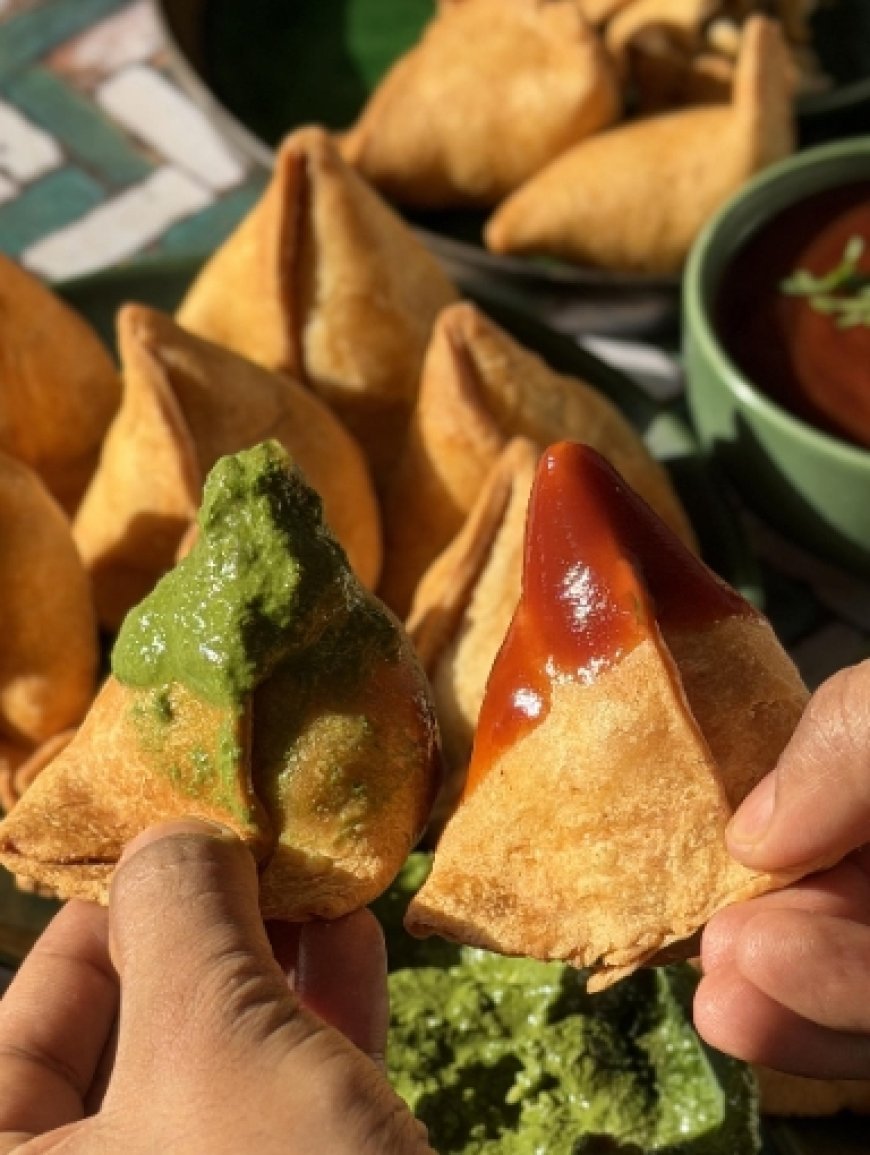


From Persia to India: How the Samosa Became an Indian Favourite
The samosa is today one of India's most recognisable snacks, but its origins lie far beyond the Indian subcontinent. Its fascinating history stretches across West and Central Asia, the Middle East and South Asia, where generations of cooks transformed a simple stuffed pastry into the beloved snack known today.


Food historians generally trace the samosa's early relatives to the Persianate world. Medieval Arabic cookbooks dating from the 10th to 13th centuries mention pastries known as sanbusak, sanbusaq and sanbusaj, names believed to be connected to the Persian sanbosag. Rather than having one clearly established birthplace, the samosa appears to have evolved as part of a wider culinary tradition.
The early versions were quite different from today's familiar potato-filled samosa. Small stuffed pastries were particularly useful for travellers, merchants and soldiers because they could be prepared beforehand, carried easily and eaten on the move. Fillings included minced meat, onions, nuts and a variety of spices.
As trade routes linked Central Asia, Persia and the Indian subcontinent, the stuffed pastry travelled with people. By the period of the Delhi Sultanate, it had entered Indian kitchens, including royal ones. Indian cooks did not simply copy the dish; they adapted it to local ingredients, flavours and cooking traditions.
One of the best-known historical references comes from the 14th-century Moroccan traveller Ibn Battuta. While describing the court of Delhi Sultan Muhammad bin Tughluq, he wrote about sambusak, a thin pastry filled with minced meat, almonds, pistachios, walnuts, onions and spices and fried in ghee.
Amir Khusrau also referred to samosa-like food enjoyed by Delhi's elite around the beginning of the 14th century. Later, the Mughal-era Ain-i-Akbari recorded sanbusa among foods prepared during the reign of Akbar, providing further evidence of the dish's established place in the culinary culture of the subcontinent.
The Potato Changed Everything
There is an intriguing twist to the history of the modern Indian samosa: the potato filling that now seems almost inseparable from it is not ancient Indian either.
Potatoes originated in South America and reached India centuries after the samosa's early arrival. Therefore, the classic aloo samosa could not have been the original form of the dish.
But potatoes proved to be an almost perfect match for Indian cooking. They were inexpensive, filling and excellent at absorbing spices. Cooks combined mashed potatoes with green peas, chillies, coriander, cumin, ginger and other seasonings, creating the spicy filling that eventually became the defining version of the samosa in much of India.
In that sense, India did not merely adopt the samosa—it reinvented it.
A Snack With Many Regional Identities
Over time, the samosa moved beyond elite and royal kitchens and became part of everyday Indian food culture. Different regions developed their own interpretations.
In Bengal, the related shingara developed distinctive shapes and fillings. Hyderabad became associated with the meat-filled lukhmi, while Goa's chamuça reflects Portuguese and broader Indian Ocean culinary influences.
The basic concept remained remarkably flexible: a crisp pastry shell surrounding a filling chosen according to local tastes and ingredients.
That flexibility helped the samosa cross social and regional boundaries. It could be filled with meat, potatoes, peas, lentils or other vegetables. It could be prepared at home, sold by street vendors, served with tea or presented at celebrations.
From Traveller to Family
Historically, the samosa did not originate in India. Its ancestry belongs to a much wider West and Central Asian tradition of stuffed pastries, with Persian and Arabic culinary records providing some of the earliest documentary evidence.
But describing the samosa simply as a "foreign" food misses the most fascinating part of its history.
Like many foods that travelled along ancient trade routes, the samosa changed wherever it went. In India, it acquired new fillings, regional variations, cooking techniques and an extraordinary place in everyday food culture.
Today, the crisp maida shell, spicy potato filling and green chutney are so deeply associated with Indian life that the snack's distant ancestry can almost seem irrelevant.
The samosa arrived as a traveller—but after centuries of adaptation, India made it part of the family.