Middle East On Edge As US Floats Fresh Strike On Iran, Tehran Threatens Gulf Undersea Cables
 frame and share



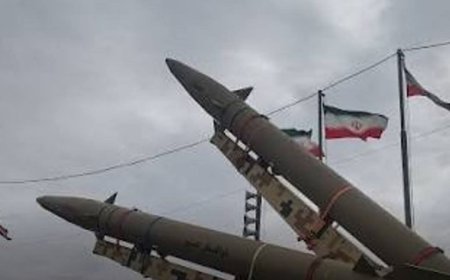
DUBAI / WASHINGTON:The Middle East could be heading towards another dangerous escalation as the United States has floated the possibility of a fresh military operation against Iran, while Tehran has warned that Gulf undersea communications cables could become targets if U.S.-Israeli attacks resume.
These developments, alongside other signs of mounting tensions and a deepening stalemate, point to growing risks.


Tehran has drawn up detailed plans to target undersea communications cables in the Gulf if the United States and Israel attack Iran again, two senior Iranian security officials told Reuters.


Their comments followed warnings by Iranian officials that undersea cables in the region could become targets in any renewed conflict if diplomacy with Washington collapses.
The two Iranian security officials, speaking on condition of anonymity, gave few details and did not say how or where exactly Tehran would carry out such attacks. But one of them said Iran would aim to prevent repairs after any attacks to prolong disruptions to communications, including internet connections.
“If Iran is attacked, there will be no more red lines ... from undersea cables to military bases, including covert ones,” one of the officials said.
The official warned Washington not to “play with fire”, and said Iran had full access to the undersea cables and could easily destroy them.
Yadollah Javani, the deputy head of political affairs for Iran’s Revolutionary Guards (IRGC), said on Wednesday that Iran could target seven major internet cables beneath the Strait of Hormuz if Iranian infrastructure came under attack.
Strategic Context:
Undersea cables carry around 99% of global internet traffic, according to the International Telecommunication Union, a UN agency. But the global impact of such attacks by Iran could be limited as less than 1% of international bandwidth passes through the Strait of Hormuz, said Alan Mauldin, research director at telecommunications research firm TeleGeography.
The strait separates Iran and Oman, linking the Gulf to the Gulf of Oman and Arabian Sea.
The consequences could nevertheless be significant for Gulf countries, where multiple cable cuts could slow internet services and disrupt financial transactions, e-commerce and cloud computing. Repairing damaged infrastructure during a conflict could also prove difficult because of security risks, higher insurance costs and restrictions on access to territorial waters.
The U.S. State Department and Iran’s Foreign Ministry did not respond to Reuters’ requests for comment on the Iranian security officials’ remarks. There was no immediate comment from Gulf states.
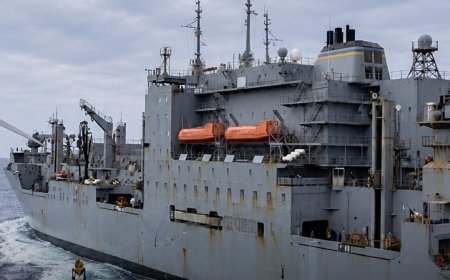
The warning comes as U.S. naval forces in the Middle East are preparing for possible renewed strikes, with sailors loading munitions including bunker-buster bombs aboard the USS George Washington carrier strike group.