Iran Claims Major Intelligence Coup After Seizing US $2.5 Million Drone
 frame and share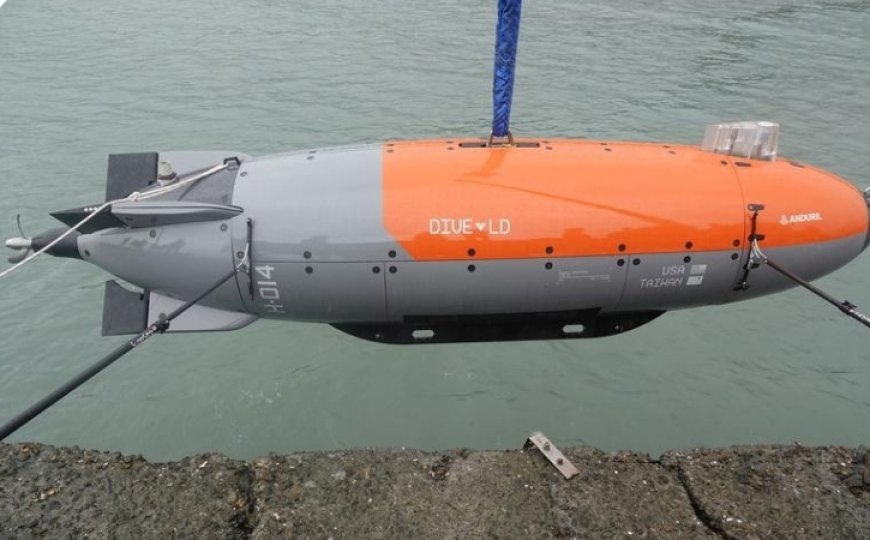


Iran Captures $2.5 Million US Underwater Drone Near Strait of Hormuz: What Secrets Could It Reveal?
Iran has claimed a significant military and intelligence success after its Islamic Revolutionary Guard Corps (IRGC) announced the capture of a US-made autonomous underwater vehicle near the entrance to the strategically important Strait of Hormuz.


The unmanned system has been identified as the Dive-LD, a 19-foot-long autonomous underwater vehicle developed by California-based defence company Anduril. The system is designed for missions including underwater mapping, mine detection, intelligence gathering and inspection of subsea infrastructure. It can reportedly operate autonomously for up to 10 days and dive to depths of around 6,000 metres. Its reported cost is approximately $2.5 million per unit.


Iran Calls It an Intelligence Victory
Iranian authorities released images and footage of the captured vehicle and presented the seizure as evidence of their ability to monitor and intercept advanced American unmanned systems operating around the Strait of Hormuz.
The capture has naturally raised questions about whether Iranian engineers could examine the vehicle's sensors, navigation technology, communications systems or other technical components.
However, there is currently no confirmed evidence that Iran obtained classified intelligence or sensitive operational data from the vehicle.
US Gives a Different Account
The Pentagon acknowledged that the US had lost the underwater drone but disputed Iran's portrayal of the incident as the capture of a highly sensitive American intelligence platform.
According to the US account, the vehicle was an older model that had malfunctioned and had been non-operational for more than a day. US officials also said it did not contain classified systems or sensitive data. Anduril similarly described the Dive-LD as a system designed to operate in risky environments where loss of the vehicle was possible.
Why the Dive-LD Matters
The incident highlights the growing importance of autonomous underwater systems in modern warfare. Unlike traditional submarines, unmanned underwater vehicles can conduct long-duration missions without putting crews at risk.
The Dive-LD can be used for seabed surveys, mine-countermeasure operations, intelligence missions and inspection of underwater infrastructure. Its capture therefore provides Iran with an opportunity to examine a piece of modern American unmanned technology, even though Washington says the particular vehicle was not carrying classified equipment.
Strait of Hormuz Becomes the Centre of the Conflict
The incident comes amid rapidly escalating US-Iran tensions around the Strait of Hormuz, one of the world's most important energy routes.
The seizure of the underwater drone occurred alongside a series of military confrontations involving US and Iranian forces in and around the Gulf. The incident therefore has significance beyond the loss of a single $2.5 million vehicle: it demonstrates how unmanned systems are increasingly becoming part of the contest for surveillance and control of strategic waterways.
For now, the biggest question remains whether the captured Dive-LD contains any information that could provide Iran with meaningful technological or intelligence advantages. Iran portrays the capture as a major breakthrough, while the United States insists that the lost vehicle was an older, malfunctioning system without classified technology.
The phrase “secret leak” should be presented as a question or claim, rather than a confirmed fact, because current reporting does not establish that classified secrets were obtained.