From the Red Fort to Rangoon: The Final Days of Bahadur Shah Zafar
 frame and share
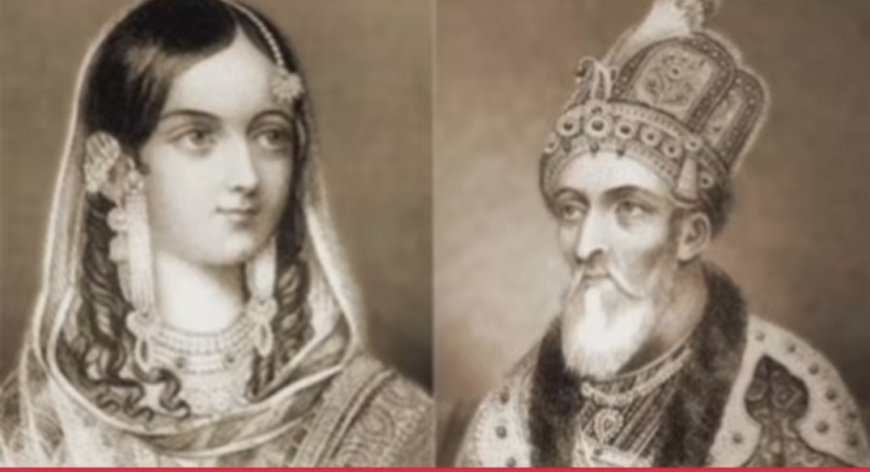


Bahadur Shah Zafar: The Last Mughal Emperor’s Tragic Final Days
Bahadur Shah Zafar, remembered as the last Mughal emperor, became one of the central symbolic figures associated with the uprising of 1857. By then, however, Mughal political power in India had already declined sharply, and Zafar’s authority was largely confined to Delhi and the Red Fort.


The 1857 Revolt and Zafar’s Role


When the uprising began in 1857, rebel soldiers reached Delhi and sought the endorsement of the elderly emperor. Zafar became a symbolic figurehead for the rebellion, even though he had limited military and political control over the forces involved.
As British forces recaptured Delhi, the Mughal court collapsed. Zafar fled the Red Fort and eventually sought refuge at Humayun’s Tomb.
Capture at Humayun’s Tomb
British forces tracked down the emperor at Humayun’s Tomb in September 1857. He surrendered to Major William Hodson, who took him into custody.
The capture marked the effective end of Mughal rule in Delhi. Zafar was subsequently put on trial by the British on charges connected with the rebellion.
Exile to Rangoon
After the trial, Bahadur Shah Zafar was removed from Delhi and exiled to Rangoon, in British-controlled Burma. British archival records from the period document the administration of British Burma and Rangoon during the years following the uprising.
Separated from his homeland, family members and the world he had known, Zafar spent his final years in exile.
A Poet in Exile
Zafar was not only a monarch but also a celebrated Urdu poet. His poetry frequently reflected themes of loneliness, loss, separation and the collapse of his world.
His famous verse about not receiving even “two yards of land” in his beloved homeland is widely associated with his exile and death, although versions and attributions of the couplet have been debated by historians.
Bahadur Shah Zafar died in Rangoon in 1862, far from Delhi. His death brought a deeply symbolic end to the Mughal dynasty's political presence in India.
The End of an Era
The story of Bahadur Shah Zafar is therefore not simply the story of a defeated emperor. It is also the story of the final chapter of the Mughal Empire, the upheaval of 1857 and the transformation of British rule in India.
His journey from the Red Fort in Delhi to captivity and exile in Rangoon remains one of the most poignant episodes of 19th-century Indian history.
S