India's Silence on Iran Attacks & Khamenei Killing: A Smart Play?
India maintains strategic silence on US/Israel attacks on Iran and Khamenei's alleged killing. Experts see this as beneficial, reflecting India's evolving ties with Israel & Gulf nations.
 frame and share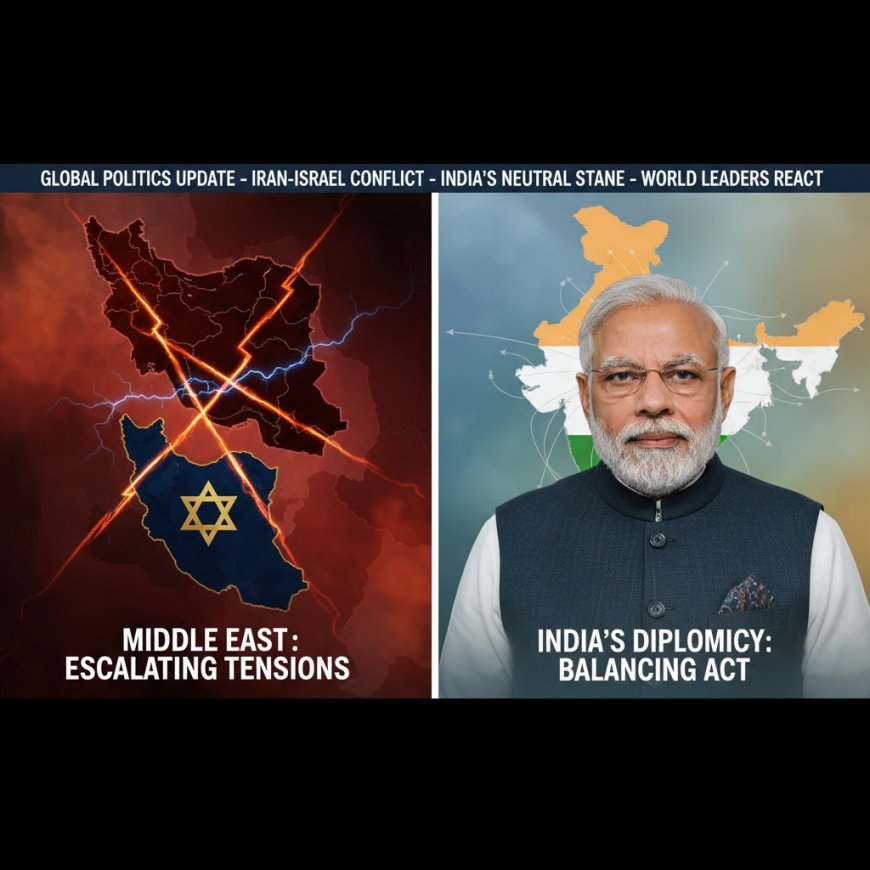


The geopolitical landscape of the Middle East has once again been rattled by severe attacks on Iran, allegedly carried out by the United States and Israel. Adding to the volatility, reports suggest the assassination of Iran's Supreme Leader, Ayatollah Ali Khamenei. In the wake of these seismic events, India's response has been notably understated, largely interpreted as a strategic silence.
New Delhi has refrained from issuing any strong condemnation or taking a firm stand on the escalating crisis. While Prime Minister Narendra Modi has engaged in discussions with Israeli Prime Minister Benjamin Netanyahu and leaders from the United Arab Emirates, there has been a conspicuous lack of public updates or direct engagement concerning Iran. This diplomatic posture, experts suggest, is far from passive; it reflects a calculated strategy beneficial to India's evolving foreign policy objectives.


India's Evolving Middle East Diplomacy
For several years, India has meticulously cultivated stronger ties with both Israel and key Gulf nations. This deepening engagement, spanning economic, strategic, and defense sectors, has reshaped India's traditional approach to the region. Faced with the current hostilities, India appears committed to maintaining this delicate balance, prioritizing its multifaceted relationships over taking an immediate, potentially divisive stance.


PM Modi's recent conversations with Israeli and Emirati leaders underscore this strategy. While these communications are crucial for maintaining existing alliances and ensuring regional stability, the absence of similar public outreach regarding Iran signals a deliberate choice to avoid entanglement in the direct conflict. This approach is rooted in a pragmatic assessment of India's national interests.
The Strategy of Silence: Why India Benefits
Analysts believe that India's silence in this highly charged environment is a pragmatic decision aimed at safeguarding its diverse interests. By not overtly siding with any party, India avoids alienating crucial partners in both camps. Its energy security heavily relies on the Gulf, while its strategic and technological partnerships with Israel are expanding. A strong condemnation of one side could jeopardize these critical alliances and investments.
Furthermore, India positions itself as a potential mediator or a stable player in a turbulent region, rather than becoming entangled in complex sectarian and geopolitical rivalries. This non-confrontational approach allows India to preserve its diplomatic flexibility and maintain channels of communication with all stakeholders, including, implicitly, Iran, without publicly endorsing or condemning specific actions.
In essence, India's measured reaction underscores a mature foreign policy that prioritizes long-term strategic gains over immediate moral posturing. As the Middle East continues to grapple with unprecedented challenges, New Delhi's quiet diplomacy and strategic neutrality are increasingly seen as its most effective tools for navigating the treacherous geopolitical currents.