Justice Kurian Joseph: Supreme Court As Constitution’s Watchdog ‘Must Bite If Barking Doesn’t Work’
 frame and share


KOCHI / NEW DELHI: Former Supreme Court Justice Kurian Joseph has warned that declining public confidence in India’s constitutional institutions threatens democratic values. He said peaceful public protests may become the last line of defence when Parliament and the judiciary fail to fulfil their responsibilities.
Speaking at a constitutional convention on the theme “Independence of Election Commission of India Compromised?”organised by the Indian Association of Lawyers (IAL), Kerala at the Kerala High Court Chamber Complex, Justice Joseph said citizens have a duty to come out in an informed and civil way to protest and protect democracy.


On Institutional Trust:


Justice Joseph said the credibility and integrity of constitutional institutions has been “very, very grossly shaken” in public perception, and that is why people are taking to the streets.
Citing socialist leader Dr Ram Manohar Lohia, he said: “When the Parliament and courts fail, then the street would come to our rescue.”
He described peaceful, informed, and civil protest not merely as a democratic right, but as a constitutional duty when governing bodies fail to act as effective checks on authority.
“They have a duty to come out in an informed way and in a civil way to protest and also take steps for the protection of democracy,” he said.
On Supreme Court As Watchdog:
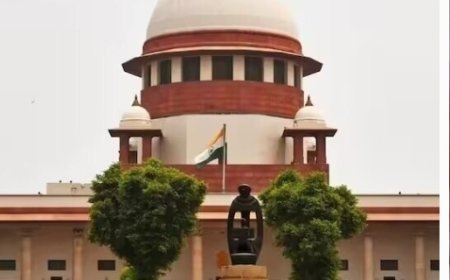
He said constitutional courts, and more particularly the Supreme Court, are the guardians and watchdogs of the Constitution.
“We have heard that famous saying that the barking dog seldom bites. But this watchdog, this guardian, is bound to bite also if the barking does not lead to the desired result,” he said.
He added that there is a perception that “there is neither barking nor biting”in such high constitutional institutions, to the extent that the will of the Constitution is more abused than honoured.
On Election Commission:
Justice Joseph stressed that the integrity of the person heading the Election Commission is crucial to its independence.
“Once the integrity of the person holding that high office is compromised, then there is no independence, and that is the death knell for democracy in India,” he said.
He called for constitutional amendments to enshrine the appointment and service conditions of Election Commission members in the Constitution itself, rather than leaving the matter to Parliament, to ensure the body’s integrity and independence.
He also questioned why the removal process for the Chief Election Commissioner differs from that for other Election Commissioners, arguing officials of comparable status should have comparable safeguards.
On Lawyers’ Silence:
He expressed concern over divisions and silence within the legal fraternity, recalling lawyers’ historical role in defending constitutional values.
“I always held a position that the silence of the lawmen would create more violence, more problems in society than the violence of the lawless men,” he said.
He urged constitutional custodians to remain “constitutionally objective”* rather than approaching constitutional questions subjectively or attacking the person who raises them.
His remarks come amid protests in Delhi demanding the resignation of Chief Election Commissioner Gyanesh Kumar* over alleged irregularities in the Special Intensive Revision (SIR) of electoral rolls, which have involved mass detentions and restrictions on movement, prompting Supreme Court intervention.