Khamenei Missing in Action: Fear of Trump or Preparation for War? Iran's Supreme Leader Skips Key Military Meet
For the first time in years, Iran's Supreme Leader Ayatollah Ali Khamenei was absent from a crucial military meeting with Air Force commanders. Is this fear of a US attack under Donald Trump, or a strategic silence before a major escalation? An in-depth analysis of Tehran's shifting power dynamics.
 frame and share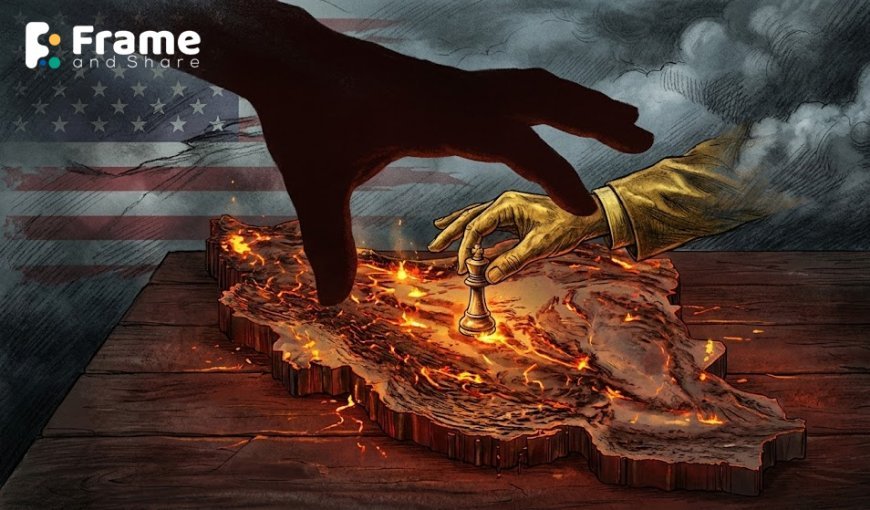


The Vanishing Leader: Why Khamenei’s Absence is Ringing Alarm Bells in the West
In the opaque world of Iranian politics, presence is power. Every public appearance, every handshake, and every speech by the Supreme Leader, Ayatollah Ali Khamenei, is scrutinized by intelligence agencies across the globe. So, when the 85-year-old cleric failed to appear at a scheduled and historically significant meeting with the commanders of the Iranian Air Force this week, it sent shockwaves through the geopolitical landscape.
For decades, this annual meeting has been a fixture in Khamenei's calendar a show of strength and solidarity with the military elite that forms the backbone of the Islamic Republic. His absence, reported by major news outlets including News24, has triggered a storm of speculation. Is the Supreme Leader gravely ill? Is he in hiding, fearing a decapitation strike from a resurgent Donald Trump administration? Or is this a calculated withdrawal, a silence before a storm that could reshape the Middle East?


The Historical Context: A Break in Tradition
To understand the gravity of this absence, one must look at the calendar. The meeting with Air Force commanders is not just a routine briefing; it commemorates the "Homafaran Allegiance" of 1979, a pivotal moment when Air Force personnel pledged loyalty to Ayatollah Khomeini, effectively tipping the scales of the Islamic Revolution.


For Khamenei to skip this event is akin to a US President missing the State of the Union address. It is unprecedented in recent years. Sources indicate that this is the first time in a long period that the Supreme Leader has not personally addressed this specific gathering. Instead, the meeting proceeded without his towering presence, leaving commanders and the public with unanswered questions.
Theory 1: The "Trump Factor" and Fear of Assassination
The most immediate and sensational theory revolves around the geopolitical climate. With Donald Trump back in the headlines and potentially influencing US foreign policy or preparing for a return to power Tehran is on high alert. The memory of the 2020 assassination of Qasem Soleimani is still fresh.
Analysts suggest that Khamenei’s security detail may have credible intelligence regarding a threat to his life.
-
The "Decapitation" Doctrine: The US and Israel have demonstrated a willingness and capability to target high-value individuals within Iran. From nuclear scientists to top generals, no one is safe.
-
Bunker Mentality: Reports suggest that Khamenei may have been moved to a secure, underground location. His absence could be a protective measure to ensure the continuity of government in case of a surprise attack. If the Supreme Leader falls, the resulting power vacuum could plunge Iran into civil war.
Theory 2: Health Concerns
At 85, Ayatollah Khamenei is no longer the vigorous revolutionary of the 1980s. Rumors of his declining health ranging from prostate cancer to other age-related ailments have circulated for years.
-
The Succession Crisis: If his absence is indeed health-related, it accelerates the quiet but brutal battle for succession. The two main contenders his son Mojtaba Khamenei and President Ebrahim Raisi are likely maneuvering behind the scenes.
-
State of Denial: The regime has a history of masking the Leader's health issues to project stability. A sudden disappearance often hints at a medical emergency that can no longer be hidden with makeup and camera angles.
Theory 3: Strategic Silence and War Preparations
A more ominous possibility is that Khamenei is not hiding out of fear, but out of focus. Iran is currently at a crossroads. Its proxy network the "Axis of Resistance" is engaged in conflicts from Gaza to Lebanon and Yemen.
-
Nuclear Breakout: Intelligence reports have repeatedly warned that Iran is on the threshold of nuclear capability. Is the Supreme Leader in a secluded war room, finalizing the decision to test a nuclear device?
-
Military Restructuring: The absence could signal a major internal purge or restructuring of the military command. With the recent tensions involving the Quds Force and the mysterious status of its commander Esmail Qaani, Khamenei might be personally overseeing a crackdown on moles and spies within the IRGC (Islamic Revolutionary Guard Corps).
The Message to the Military
By missing the meeting, Khamenei might also be sending a subtle but powerful message to his commanders: Do not rely on me; be ready to fight alone. In a regime where the leader is the spiritual and political compass, his withdrawal forces the military apparatus to operate with more autonomy. This could be a test of the chain of command, a drill for the inevitable day when the Supreme Leader is no longer there.
A Ticking Clock
Whether driven by the fear of a Trump-ordered strike, a failing body, or a secret war plan, Ali Khamenei’s absence is a destabilizing event. In the Middle East, silence is rarely peaceful. It is often the deep breath before the plunge. As the world watches Tehran, the empty chair at the Air Force meeting speaks louder than any speech Khamenei could have given: change is coming, and it might be violent.