RSS Registration Row Reignites: Priyank Kharge Seeks Legal, Financial Details; Mohan Bhagwat Cites ‘Voluntary Association’ Status.
 frame and share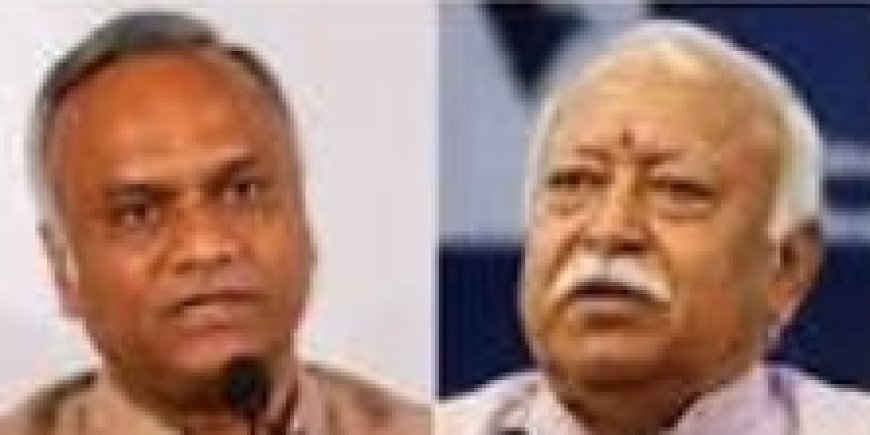


Bengaluru:-The century-old debate over the Rashtriya Swayamsevak Sangh’s legal status is back in the spotlight after Karnataka Minister Priyank Kharge wrote to RSS chief Mohan Bhagwat demanding transparency on the organisation’s registration, finances, and tax compliance.
Kharge’s Letter: ‘Accountability for Large Organisations’


Kharge questioned how an organisation of the RSS’s scale could operate for 100 years without being formally registered. He asked the Sangh to disclose its legal status, sources of funding, financial statements, and tax compliance.


“An organisation of such scale should operate with greater transparency and accountability,” Kharge argued. He also took aim at Prime Minister Narendra Modi and the RSS on constitutional values, stating that “Karnataka has nothing to learn from them on the Constitution”.
Bhagwat’s Reply: ‘Law Doesn’t Mandate Registration’.
Responding to the demand, RSS Sarsanghchalak Mohan Bhagwat said Indian law does not require every voluntary association to register. The Sangh has “operated openly for over a century” and is “recognised under existing laws,” he said.
Bhagwat added that registration is generally required only when organisations seek specific legal benefits or government funding. He dismissed the controversy as “political in nature”.
The Core Legal Question: Voluntary Association vs Public Accountability.
The exchange has moved beyond the RSS itself to a larger question: Should all large social and ideological organisations be legally required to register and publicly disclose finances? Or should voluntary associations continue to enjoy the flexibility currently permitted under Indian law?
The RSS was founded in 1925 and has functioned through multiple bans, court challenges, and political scrutiny without formal registration as a society or trust.
Political Divide: ‘Targeting’ vs ‘Transparency’.
For RSS supporters, Kharge’s demand is seen as another attempt to target an organisation that has existed since 1925. Critics argue the issue is about transparency in public life, especially for entities with wide social and political influence.
Kharge also used the opportunity to take a swipe at Union Minister HD Kumaraswamy, urging him to discuss the Bidadi project “directly with the CM” instead of through the media.
What’s Next.
The war of words shows no sign of cooling. While the RSS maintains it complies with all applicable laws, calls for a uniform framework for large voluntary groups are growing louder.
The bigger picture: The debate may set precedent on where India draws the line between the constitutional right to form associations and the public’s demand for financial accountability from influential organisations.