CEC Gyanesh Kumar vs Other Election Commissioners: Supreme Court Agrees to Hear Plea
 frame and share


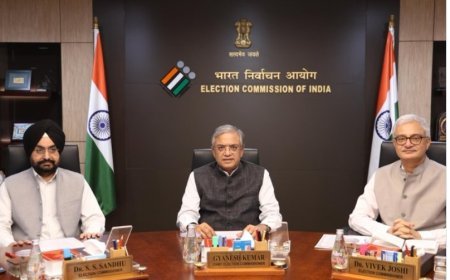
New Delhi: The Supreme Court on Tuesday agreed to list a petition questioning whether Chief Election Commissioner Gyanesh Kumar can take decisions on behalf of the Election Commission of India (ECI) without the concurrence of the other two Election Commissioners, Sukhbir Singh Sandhu and Vivek Joshi. The matter is expected to be listed for hearing next week.
The plea was mentioned before a three-judge Bench headed by Chief Justice of India Surya Kant, along with Justices Joymalya Bagchi and V. Mohana. Senior Advocate Vikas Singh urged the court to examine whether the ECI, being a multi-member constitutional body, can function through decisions taken by the CEC individually.


The petition seeks a writ of quo warranto, asking the CEC to explain the authority under which he allegedly acted, and continues to act, as though he could exercise the collective decision-making powers of the Commission on his own.


Under Section 18 of the Chief Election Commissioner and Other Election Commissioners Act, 2023, the business of the Commission is to be conducted, as far as possible, unanimously. If the CEC and Election Commissioners differ, the matter is to be decided by a majority.
The petition alleges that several decisions connected with electoral-roll processes and the Special Intensive Revision (SIR) were taken or implemented without the approval of the other Election Commissioners. It refers to reports that Sandhu and Joshi had raised objections to various decisions during the period from October 2025 to August 2026.
The petition further seeks a declaration that decisions allegedly taken without the required approval under the 2023 Act are invalid. It also challenges actions connected with the SIR exercise. These are allegations contained in the petition and have not been judicially established.
The Supreme Court's decision to list the matter means the issue will now receive judicial consideration; it does not amount to a finding that CEC Gyanesh Kumar acted unlawfully.