PM Modi Inaugurates Seva Teerth & Kartavya Bhavan: A New Era of Decolonized Governance
Prime Minister Narendra Modi inaugurated Seva Teerth and Kartavya Bhavan in New Delhi, marking a historic shift from colonial symbols to citizen-centric governance. Read about the new PMO, the vision for Viksit Bharat, and the end of the colonial mindset.
 frame and share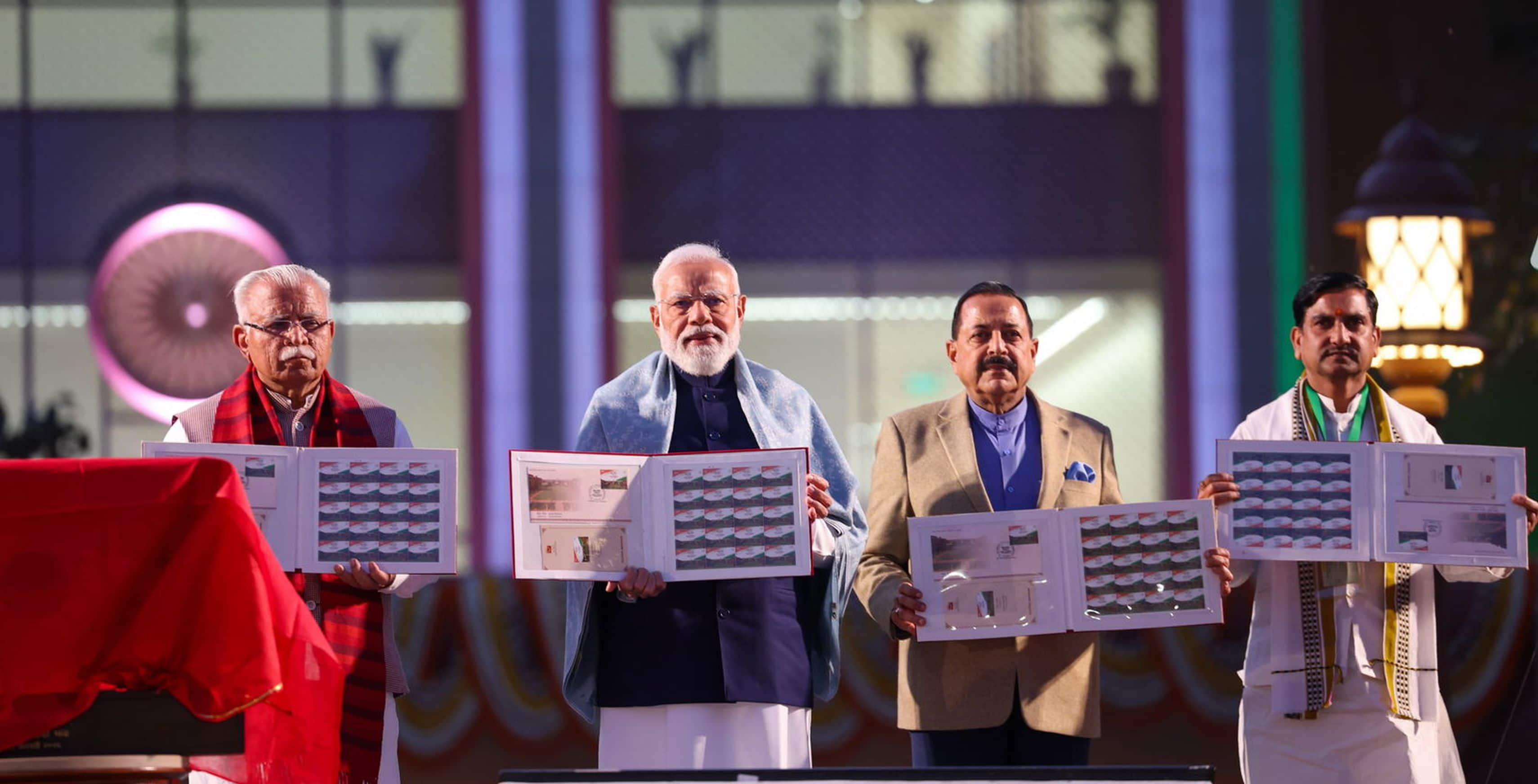


From Power to Service: PM Modi Dedicates Seva Teerth and Kartavya Bhavan to the Nation
New Delhi: In a landmark event symbolizing India's shedding of its colonial past and its march towards a developed future, Prime Minister Narendra Modi inaugurated the new Seva Teerth (Prime Minister's Office) and Kartavya Bhavan-1 & 2 (Central Secretariat buildings) on Friday, February 13, 2026. Addressing a gathering of ministers, officials, and engineers, the Prime Minister termed the inauguration not just as the opening of new buildings, but as the dawn of a new era in Indian governance—one defined by "Seva" (service) rather than "Shasana" (rule).
The inauguration, coinciding with the auspicious occasion of Vijaya Ekadashi, marks a significant milestone in the Central Vista Redevelopment Project.


Breaking the Chains of Colonialism
A central theme of PM Modi's address was the urgent need to decolonize India’s administrative mindset and infrastructure. He drew a sharp contrast between the old symbols of power and the new temples of service.


-
South Block and North Block: The Prime Minister reminded the audience that the iconic North and South Blocks on Raisina Hill were constructed by the British not to serve Indians, but to rule over them. Quoting a former Viceroy, he noted that these buildings were designed to impose the will of the British monarch and were intentionally placed on a hill to look down upon the common people.
-
Seva Teerth: In contrast, the new PMO complex, named Seva Teerth, is built on the ground level, symbolizing a government that is connected to its people. "These buildings have been built to fulfill the aspirations of the people of India, not to implement the colonial mindset," PM Modi declared.
Modern Infrastructure for a Modern India
The Prime Minister highlighted the practical necessity of these new constructions. For decades, various ministries of the Government of India were scattered across 50 different locations in Delhi, leading to inefficiency, high rental costs (₹1,500 crore annually), and logistical nightmares.
-
Consolidation: The new Kartavya Bhavans will bring different ministries under one roof, enhancing coordination and saving valuable time and resources.
-
Technology: Unlike the century-old North and South Blocks, which struggled to accommodate modern technology and expanding staff, the new buildings are future-ready, equipped with state-of-the-art facilities to drive the Reform Express.
Preserving History: A New Museum
While moving forward, PM Modi acknowledged the historical significance of the old buildings where pivotal decisions for independent India were taken. He announced that the old South Block and North Block will not be discarded but will be converted into the "Yuge Yugeen Bharat" National Museum. This museum will serve as a testament to India's civilizational journey and inspire future generations.
The Philosophy of 'Seva' and 'Kartavya'
The naming of the new buildings reflects a profound philosophical shift in governance.
-
Seva Teerth: The PMO is now Seva Teerth (Pilgrimage of Service). PM Modi emphasized that in Indian culture, Seva is the highest duty (Paramo Dharmah). He urged officials to view their work not as an exercise of authority but as an act of service to the 140 crore citizens of India.
-
Kartavya Bhavan: The secretariats are named Kartavya Bhavan (House of Duty), reinforcing the idea that rights flow from the performance of duty.
A Legacy of Change
The Prime Minister traced the journey of removing colonial symbols since 2014:
-
Race Course Road became Lok Kalyan Marg.
-
Rajpath became Kartavya Path.
-
Mughal Gardens became Amrit Udyan.
-
The Old Parliament became Samvidhan Sadan.
He stated that these were not mere name changes but a deliberate effort to transform the "mindset of power" into a "spirit of service."
Vision for 2047
Concluding his address, PM Modi linked these new structures to the goal of Viksit Bharat 2047. He exhorted every Karmayogi (civil servant) entering these buildings to ask themselves daily: "Will my work today make the life of a citizen easier?" He expressed confidence that Seva Teerth would become a global model for citizen-centric governance, guiding India toward a future where it is defined not just by its economy, but by the empathy and efficiency of its administration.