FDA-Approved 'Histotripsy' Destroys Tumors With Sound and Water — No Scalpel, No Radiation, No Recovery Time.
 frame and share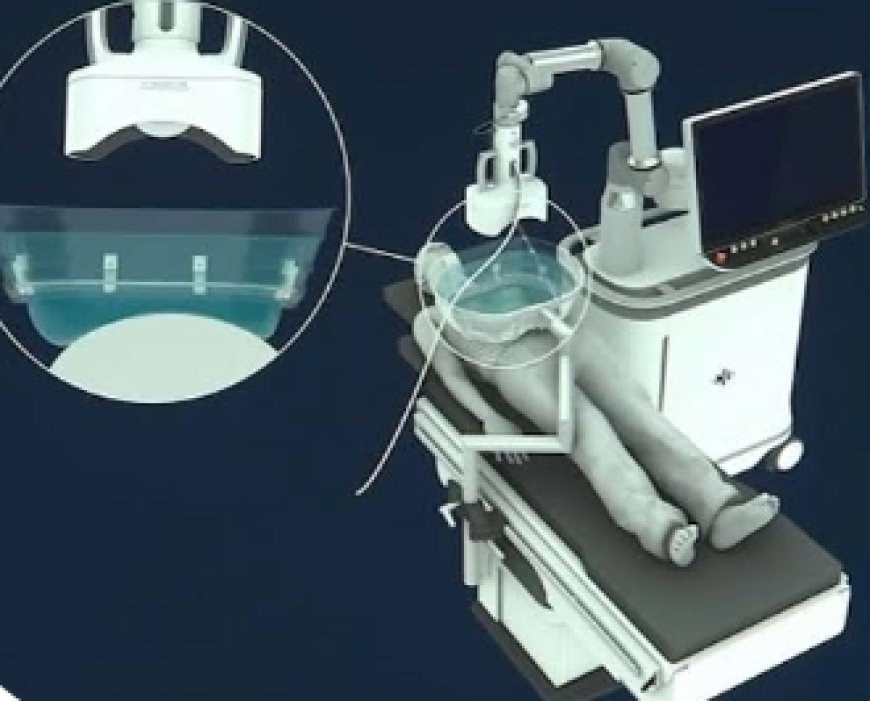


Revolutionary ultrasound therapy ruptures cancer cells in seconds, spares healthy tissue; 95.5% liver success rate; Patient Chris Donaldson now cancer-free after ocular melanoma spread to liver.
MISSION VIEJO, Calif June 18, 2026: A groundbreaking cancer treatment that uses only focused sound waves and water to obliterate tumors is giving new hope to patients with limited options. Called histotripsy, the FDA-approved, non-invasive therapy is being pioneered at Providence Mission Hospital and is already transforming lives.


How It Works: 'Magic Bubbles' Kill Cancer Instantly.


Histotripsy uses high-energy, focused ultrasound pulses transmitted through degassed water to create microscopic bubble clouds at a target the size of a grain of rice. The bubbles rapidly expand and collapse, mechanically rupturing cancer cells without heat, radiation, or incisions.
“Histotripsy is a technology that uses ultrasound waves that go to a very small point… And it just ruptures the cells and kills them instantly,”said Dr. Kevin Burns, Chief of Interventional Radiology at Providence Mission Hospital. “You are asleep for this procedure just to prevent any sort of pain or discomfort. But there's no incisions or anything like that.”
Unlike thermal ablation or surgery, histotripsy spares healthy tissue, blood vessels, bile ducts, and nerves because they have different structural thresholds for cavitation. The treatment zone is sharply defined and resorbs quickly.
Patient Success: From 3-Year Prognosis to Cancer Free
Chris Donaldson, 48, of Alabama, traveled to Mission Hospital after his ocular melanoma metastasized to his liver. Doctors gave him a 2-3 year prognosis with no effective treatments available.
“I was basically told I had three years, and when it metastasizes to your liver, it somewhat starts a clock of two years. And there was no treatment whatsoever,” Donaldson said.
After undergoing histotripsy, his liver scans show complete cancer-free status. “It's innovative. I think it should be used widespread for other types of cancers,”he said.
Clinical Results: 95.5% Local Control, Immune Boost Potential.
The FDA cleared histotripsy for liver tumors in October 2023 after clinical trials showed 95.5% success rates for local tumor control. Providence Mission Hospital leads the nation in treating patients with the modality.
Early studies suggest an added benefit: The liquefied tumor debris may act like a vaccine, stimulating the body’s CD8+ T cell response to identify and attack remaining cancer cells elsewhere a phenomenon called the abscopal effect.
A 2026 case report detailed a breast cancer patient with multifocal liver metastases who achieved complete metabolic response after two staged histotripsy treatments, with no complications.
Why It’s a Game-Changer vs. Traditional Treatment.
Histotripsy Surgery/Radiation/RFA
Non-invasive, no incisions Requires incisions or needles
Non-thermal, non-ionizing Heat/radiation can damage healthy tissue
No recovery time Days to weeks recovery
Tissue-selective spares vessels/ducts Risk to critical structures
Real-time ultrasound guidance Limited real-time monitoring
May boost immune response Immune suppression common
“It’s not even a sterile procedure… Success rates have been very, very good for this procedure,”Dr. Burns noted.
What’s Next: Breast, Kidney, Pancreatic, Thyroid Cancers
Developed over 20 years, histotripsy is now being studied for kidney, pancreatic, breast, and thyroid tumors. The UK completed the world’s first feasibility trial for renal cancer in April 2024.
Major medical centers are integrating the robotic-assisted Edison System into patient care. Researchers are also exploring histotripsy for thrombosis, abscesses, and biofilms.
Limitations & Outlook.
While FDA-approved for liver tumors, histotripsy requires the target to be visible on ultrasound and accessible by sound waves. Long-term data and expanded trials are ongoing. Still, experts call it a “paradigm shift in interventional oncology.”
“Histotripsy has the potential to improve precision and outcomes across a multitude of specialties, from oncology to cardiovascular medicine,”researchers wrote in Cancers journal.
Source: Dador, D. Histotripsy treatment kills cancer cells with sound. ABC7 Eyewitness News. FDA clearance Oct 2023; Providence Mission Hospital; PubMed studies 2024-2026.